








In real-time communication, security is not only about protecting data. It is also about doing that without slowing the experience down. Applications such as video calling, voice chat, live streaming, and online gaming all depend on fast data delivery, which means traditional transport security approaches are not always the best fit. This is where DTLS becomes important. It is designed to protect data sent over UDP while still supporting the low-latency behavior that real-time applications require.
What is DTLS?
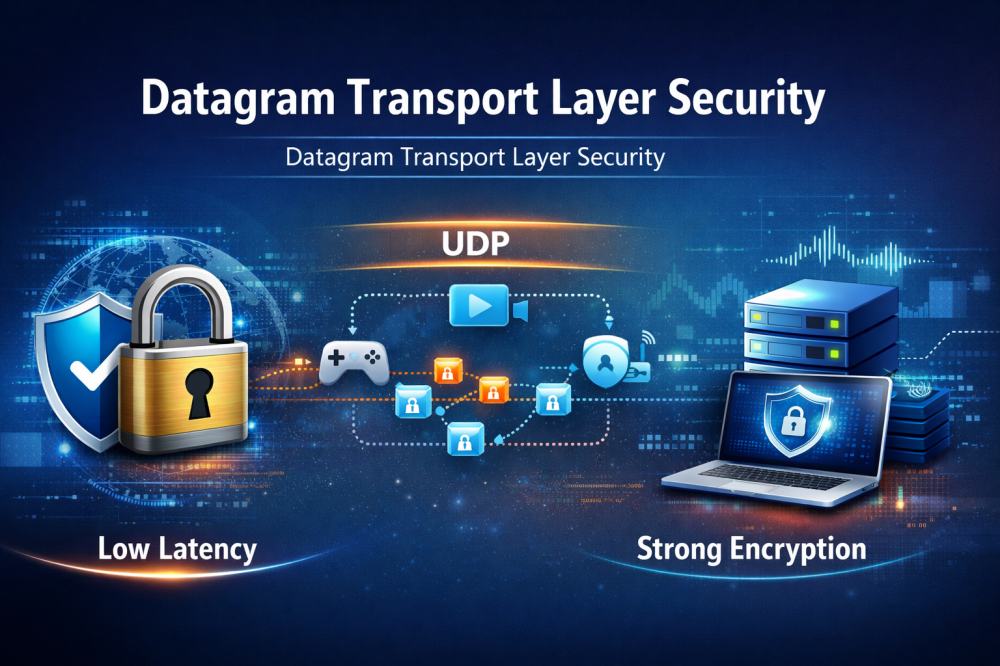
DTLS stands for Datagram Transport Layer Security. It is a protocol used to secure communication over UDP. In simple terms, it brings encryption, authentication, and data integrity to applications that rely on fast packet-based transmission. It is often described as the UDP counterpart to TLS. While TLS protects TCP-based communication, DTLS is built for environments where packets may arrive out of order, be delayed, or be dropped entirely.
This makes this UDP security protocol especially useful in real-time systems. During a video call or live audio session, waiting for every lost packet to be retransmitted can create noticeable delay. In many of these scenarios, maintaining smooth interaction is more important than guaranteeing perfect delivery of every packet. This security layer enables secure communication without working against the nature of UDP.
How DTLS Protects Data
DTLS provides the same core security goals developers expect from TLS: confidentiality, integrity, and authentication. It uses encryption algorithms such as AES to prevent unauthorized parties from reading transmitted data. It also uses message authentication and integrity checks to detect whether packets have been modified in transit. During the handshake process, certificates and cryptographic negotiation help verify the identities of the communicating parties and establish secure session keys.
Another important capability is forward secrecy. When DTLS is configured with modern key exchange methods, it can protect past sessions even if long-term private keys are compromised later. This is particularly valuable in applications that handle sensitive communication, such as business meetings, telehealth, and online education.
How DTLS Works
The overall flow of this security layer is similar to TLS, but it has been adapted for UDP. Before any protected data is exchanged, the two endpoints perform a handshake to negotiate encryption methods, verify identity, and establish shared keys. Once that secure session is in place, application data can be transmitted in encrypted form.
The difference is that DTLS cannot assume packets will always arrive in order or arrive at all. Because UDP does not provide delivery guarantees, DTLS includes its own logic for sequence tracking, replay protection, and handshake retransmission. This allows it to function reliably even in networks with packet loss or reordering. Instead of forcing UDP to behave like TCP, DTLS accepts the characteristics of datagram transport and secures communication within that reality.
DTLS vs TLS
While DTLS and TLS share the same core security goals, the main difference lies in the transport protocol they are built for and the types of applications they best support.
| Feature | TLS | DTLS |
|---|---|---|
| Transport protocol | TCP | UDP |
| Connection type | Connection-oriented | Connectionless |
| Packet delivery | Reliable and ordered | Best-effort, packets may be lost or arrive out of order |
| Retransmission | Handled automatically by TCP | No built-in retransmission from UDP |
| Typical use cases | HTTPS, email, secure file transfer | WebRTC, voice/video calls, streaming, gaming |
| Latency | Higher but more reliable | Lower and better for real-time interaction |
| Best for | Accuracy and complete delivery | Speed and low-latency communication |
Where DTLS is Commonly Used
DTLS is widely used in systems where real-time performance matters. While the specific scenarios may differ, they all share one common requirement: security must not come at the cost of responsiveness.
1. WebRTC Voice and Video Communication
One of the most common use cases of DTLS is WebRTC. It plays a critical role in securing real-time voice and video sessions by protecting communication between endpoints and supporting secure media transport. This is why this security layer is widely used in video conferencing, voice calling, telehealth, and online education platforms.
2. Live Streaming
This protocol is also commonly used in live streaming environments where low latency is essential. In these scenarios, waiting for lost packets to be retransmitted may negatively affect playback smoothness and viewer experience. The secure transport mechanism helps secure the stream while preserving the fast delivery model of UDP.
3. Multiplayer Gaming
Online games often exchange frequent real-time state updates such as player movement, actions, and environment changes. DTLS helps protect these packets without introducing the additional delay that would come with a more reliability-focused transport model.
4. UDP-Based VPN Connections
Some VPN solutions use DTLS over UDP to reduce latency and improve transmission efficiency. This is particularly useful in environments where speed and responsiveness directly affect connection quality.
5. Industrial IoT and Edge Devices
In industrial IoT scenarios, DTLS can help secure communication between devices, sensors, and control systems. These environments often require both transport-layer security and fast packet delivery, making DTLS a strong fit.
Why DTLS Matters in WebRTC
For developers building WebRTC applications, DTLS is especially important because it helps establish trust and secure media transport in real time. In practice, this protocol is used as part of the WebRTC security model to negotiate keys and protect communication between endpoints. Without it, real-time audio and video would be much harder to secure in a standardized and interoperable way.
This is one reason DTLS remains so relevant in modern communication infrastructure. As more applications move toward real-time interaction, whether for meetings, customer support, AI voice assistants, or live collaboration, transport security must protect users without adding unnecessary friction.
How ZEGOCLOUD Helps Secure Data Transmission
In real-time communication, transport security is a core part of the overall user experience. Protocols such as DTLS help protect data exchanged over low-latency communication channels, especially in WebRTC-based environments where both security and responsiveness matter. ZEGOCLOUD builds a secure real-time communication infrastructure with this requirement in mind, combining transport protection, identity verification, signature validation, and encrypted data transmission to help safeguard voice, video, and live streaming interactions.
Beyond protocol-level protection, ZEGOCLOUD also supports secure and reliable data delivery through its global network architecture and intelligent routing capabilities. This helps developers build real-time applications that not only stay responsive at scale but also maintain strong standards for confidentiality, integrity, and availability during transmission.
FAQs
Q1: What is DTLS used for?
DTLS is used to secure UDP-based communication, especially in real-time applications such as voice calls, video meetings, live streaming, gaming, and WebRTC systems.
Q2: Is DTLS as secure as TLS?
Yes. DTLS provides the same core protections as TLS, including encryption, authentication, and integrity checking. The main difference is that DTLS is designed for UDP, while TLS is designed for TCP.
Q3: Does DTLS support forward secrecy?
Yes. With the right key exchange methods, DTLS can support forward secrecy and protect past sessions even if long-term keys are exposed later.
Let’s Build APP Together
Start building with real-time video, voice & chat SDK for apps today!
