







Every message finds its real power when it fits the moment around it. Thus, contextual communication turns plain talk into a meaningful exchange that feels alive and personal. It reflects the mood and relationship in every word chosen with care. So, if you want to learn more about this term in detail, this guide provides complete information on how to enable it with a robust solution.
What is Contextual Communication?
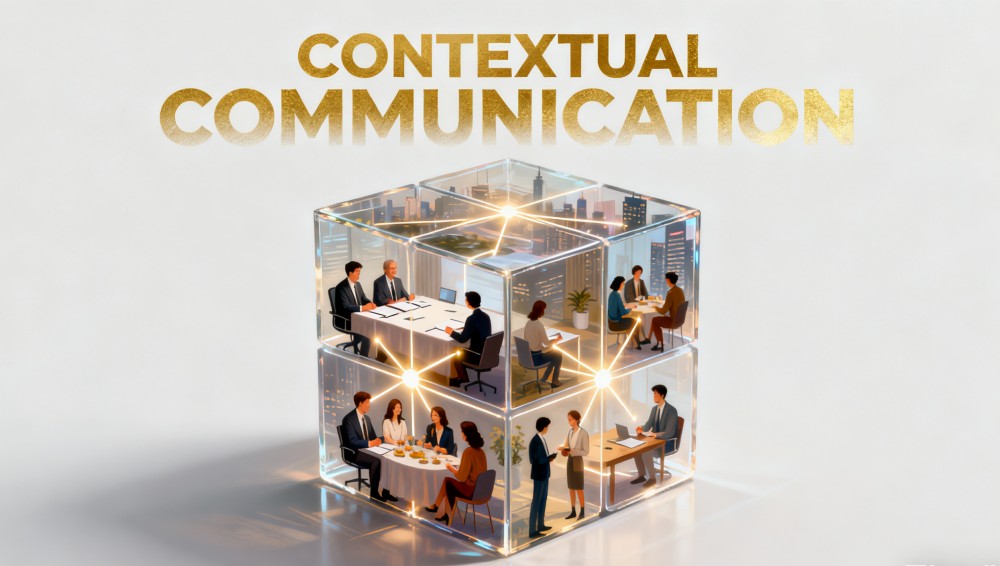
Contextual communication means sharing information whose meaning depends on the situation and background surrounding a message. To further explore the contextual communication definition, in this type of communication, both sides understand not only the words but also the tone and purpose behind them.
So, the focus stays on what is said and what surrounds it to form a complete understanding. Additionally, it helps people know why a message matters by connecting it with the shared history and control context. It also builds clarity and supports better understanding in personal and professional life.
How Contextual Communication Works
Before you look for some contextual communication examples, know that it depends on what surrounds the exchange and what both sides already know. Therefore, this section further explains its working so you can gain an in-depth idea when it comes to applications:
1. Idea Formation in Context
The sender forms an idea by keeping the background in mind, and this includes shared experience and emotional tone. Hence, this awareness gives shape and purpose to what the sender wants to say. Additionally, it guarantees that the meaning connects ideally with the given situation.
2. Encoding with Relevance
When ideas are tuned into words, the sender then chooses the tone, style, and expressions that fit the recipient’s role. Here, the sender considers the recipient’s culture, role, and current events to sound the message appropriately. Moreover, the sender ensures that the message sounds respectful and easy to interpret within that relationship.
3. Selecting the Appropriate Channel
Consequently, the sender then decides how he wants to share the message and what mode to use. For that, he can use face-to-face mode for urgent matters, chat on any platform for quick updates, or email for formal notes. Hence, the choice depends on privacy, urgency, and the communication norms within that specific group or setting.
4. Transmission in a Specific Environment
To make contextual communication successful, the message then moves to the chosen medium, but the environment can affect its delivery. This includes background noise, workplace pressure, or digital interruptions that can distort the meaning. Additionally, it can delay understanding, making awareness of the settings crucial.
5. Decoding and Interpretation
After the successful message delivery, the recipients start interpreting it. Hence, he combines the words with context, clues such as tone, facial expressions, timing, and relationship. These metrics help uncover hidden meaning, humor, and emotional signals that plain text or speech might not reveal.
6. Feedback and Adjustment
Furthermore, the recipients reply in accordance with the shared understanding. If any confusion arises, both sides use additional clues, such as clarifications and tone changes, to realign the meaning. Hence, this process strengthens mutual understanding and prevents miscommunication in ongoing interactions.
Why is Contextual Communication Important?
Though many of you learn the contextual communication definition, you might still lack its hype. Thus, this section highlights the importance of this approach in creating clear, meaningful, and effective exchanges.
| Reason | Description |
|---|---|
| Enhances Clarity | Reduces misunderstandings by ensuring messages are interpreted as intended. |
| Improves Efficiency | Speeds up conversations and workflow by giving everyone the information they need upfront. |
| Increases Productivity | Helps teams organize work, avoid repetition, and focus on action. |
| Personalizes Customer Experience | Allows support agents and businesses to tailor interactions for better satisfaction. |
| Fosters Collaboration | Provides relevant background for projects, enabling faster alignment and teamwork. |
Common Use Cases for Contextual Communication
If you want to know where contextual communication is being applied and how, this section is for you. So, review the given use cases for this type of communication and learn how to apply it too:
- Customer Support Personalization: Businesses tailor their customer support replies based on the user history, device type, and recent activity. Thus, this approach allows representatives to address issues faster and provide solutions that match individual situations.
- In-App Assistance for Users: Developers are using this approach in-app to display tips or guidance on where a user is within the interface. For instance, a banking application can show security reminders when a user logs in from a new device or location.
- Targeted Marketing Messages: A company sends promotional messages that align with the customer’s interests, purchase history, or behavior. Hence, suppose a travel application that suggests flight deals from the user’s nearest airport to create high relevance.
- Real-Time Collaboration in Teams: Collaboration platforms can adapt communication based on the project’s progress and participants’ roles. So, team members can receive updates or alerts that match their personalities to improve coordination and clarity.
- Smart Device Interactions: A Smart home system can also adjust the notifications or voice responses based on the user’s context. For example, a voice assistant can lower its volume and switch to text alerts when it detects a quiet environment.
Technology Stack Needed for Contextual Communication
Once developers learn about some examples of contextual communication, the next thing that comes to their mind is what tech stack makes one solution. Thus, this section resolves this query for you, as it offers a detailed tech stack required for contextual communication:
| Layer | Examples / Technologies |
|---|---|
| Frontend Layer (User Interaction) | Mobile apps (iOS, Android), Web apps, React, Swift, Kotlin |
| Backend Layer (Communication Engine) | Node.js, Java, Python, Ruby on Rails, Express.js |
| Real-Time Messaging & Events | WebSockets, MQTT, Firebase Realtime Database |
| Contextual Intelligence Layer (AI/NLP) | TensorFlow, NLP libraries, AI models |
| Database & Storage Layer | SQL/NoSQL databases (MongoDB, PostgreSQL), Cloud Storage |
| Integration & Middleware | REST APIs, GraphQL, SDKs, Enterprise middleware |
| Cloud & Infrastructure Layer | AWS, Azure, Google Cloud, Kubernetes, Docker |
| Analytics & Monitoring Layer | Google Analytics, Grafana, Prometheus, ELK Stack |
How to Build Contextual Communication into Your App
When you are out to build a contextual communication into your app, know that it involves designing messages and an interaction system. So, if all this seems difficult to comprehend, review the given workflow for guidance:
Key Components of Contextual Communication
- Virtual Context: It covers what users do inside the application, such as filling out forms or browsing the product. Hence, it helps the system tailor messages and responses based on the user’s immediate actions.
- Physical Context: This component relates to data from sensors like GPs or microphones. So, it defines the user’s environment so applications can adjust the experience based on location or activity.
- Analytic & Big Data Context: It uses behavioral data, CRM records, and cookies to understand the habits and preferences. Thus, it enables more accurate behaviors and personalized communication over time.
After having the basic idea of the main components, here is how you can build an app:
1. Gather User Data
Collect users’ metadata, preferences, interaction logs, and environmental details, such as device status and network quality. This includes both active data, meaning the user’s input, and passive data like background metrics. After that, segment users by role, lifecycle stage, or specific behavioral triggers. Hence, this will ensure precise and relevant communication across different contexts.
2. Map Customer Journey
While you are clear on the contextual communication definition, identify the touchpoints and decision moments where timely communication adds value. Hence, this includes onboarding, new-feature discovery, and upgrade prompts. Additionally, define the messages linked directly to user actions rather than time schedules. This structure ensures every message fits the situation and feels naturally placed within the experience.
3. Design Context-Aware Messaging
Now, craft and design in-app messages that stay short and actionable. While doing so, apply progressive disclosure so users first see simple alerts and then access detailed information if desired. Additionally, add visuals, icons, and interactive UI elements to support quick understanding and minimize effort. Above all, localize the tone, language, and content according to the user’s region and persona type.
4. Build Technical Infrastructure
Adopt serverless storage solutions or API-based systems to manage contextual data efficiently. Hence, tools such as ZEGOCLOUD or similar platforms allow real-time propagation of user and channel metadata. In addition, establish a relationship between the user profile and communication channels. This structure ensures immediate updates whenever a user’s context changes to keep all participants informed within shared groups or sessions.
5. Test and Optimize
Finally, run a test across different message formats, delivery timing, and content styles to measure effectiveness. Additionally, use detailed analytics to access adoption, engagement, and retention rates. Also, adjust the message design or targeting rules based on insights from user feedback and performance data. Set the frequency limits and apply adaptive segmentation to prevent message overload and preserve user trust.
How ZEGOCLOUD Enables Contextual Communication
ZEGOCLOUD enables contextual communication by offering real-time APIs and SDKs for text, voice, and video. Hence, by integrating these into the application, users can benefit from features such as one-on-one or group chat, AI noise cancellation, and audio rooms. Moreover, when these SDKs are paired with the AI Agent API, developers can enable real-time interaction in apps such as customer support.
This means that the AI agent leverages NLP and TTS models along with contextual and emotional awareness. Users can interact with them in groups or individually through text, voice, or video call, and can transit when needed. Additionally, you can update the prompts in 500ms while the system handles large audiences with low delay and strong security. The platform also tracks user activity and device status to adjust app communication strategies.
Conclusion
Summing up, this guide has explained the term contextual communication in detail while highlighting its importance. You also learned about its use cases and what tech stack is required to use this approach in applications. For real-time communication and seamless integration, use ZEGOCLOUD to enhance messaging and deliver context-aware interactions across platforms.
FAQ
Q1: What is an example of contextual communication?
A good example of contextual communication is a customer support chat that automatically displays the user’s purchase details or issue history to the support agent. This allows the conversation to be more relevant and personalized to the user’s situation.
Q2: What is contextual conversation?
Contextual conversation refers to an interaction where the system understands and uses previous messages, user behavior, or real-time data to maintain meaningful and coherent dialogue. It helps make communication feel natural and human-like.
Q3: What is the communications context?
The communications context is the environment or situation in which communication occurs. It includes factors such as time, location, participants, purpose, and the relationship between the sender and receiver that influence how messages are understood.
Q4: What are the 5 communication contexts?
The five main communication contexts are intrapersonal, interpersonal, group, public, and mass communication. Each describes a different setting or scale in which communication happens, from personal self-talk to large-scale public messaging.
Let’s Build APP Together
Start building with real-time video, voice & chat SDK for apps today!
