Talk to us
Talk to us
menu

How to Create an e-Learning App Like Unacademy

How to Create an e-Learning App Like Unacademy

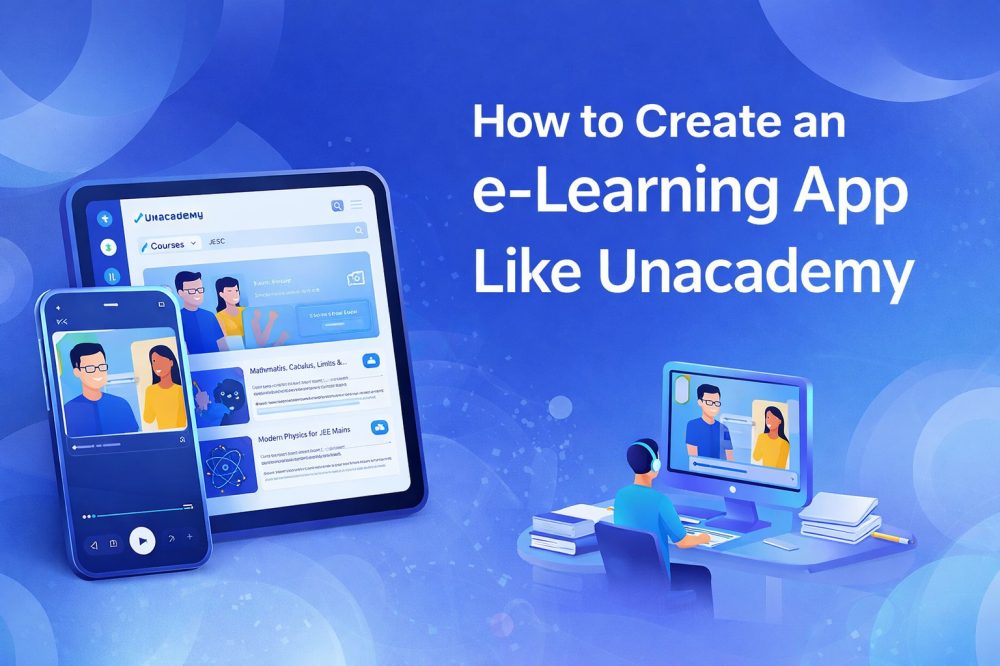
To create an e-learning app, you need to define your learning niche, integrate live or recorded learning features, and build a platform on a secure, scalable tech stack. In 2026, websites like Unacademy have transformed education through live classes and expert guidance. Thus, developing a similar app could bring quality education directly to learners’ fingertips, which will be discussed in this article.

Unacademy-Like eLearning App Market Overview

According to Custom Market Insights, the e-learning app market was valued at approximately USD 366 billion in 2025 and is expected to continue growing rapidly. Among all, India is one of the fastest-growing e-learning and mobile-learning markets, directly supporting Unacademy apps. Furthermore, India’s Online Education Market is estimated to be approximately USD 3.6 billion by 2025. Another report states that learning-related videos generate millions of views with a global share of 28% Asia and 35% North America.

As per the current segmentation data, corporate learning accounts for approximately 58% of total global e-learning usage. Surprisingly, corporate training alone generated about USD 245.5 billion in 2024 and is forecast to grow at 13% CAGR through 2027. Factually, most industries are now leveraging e-learning for workforce development, given the global need for digital training.

Key Features of a Unacademy-Like App

To meet Unacademy learning app expectations, review the provided features and try to include them in your app:

1. Exam and Course Categories

Include clear exam categories, such as UPSC and NEET, to help users find the right content. Moreover, incorporate filters and search options to allow sorting by subject, level, and language.

2. Daily Live Classes

It allows educators to teach in real-time with audio/video and on-screen writing, giving students a sense of the classroom. Plus, class schedules and reminders ensure learners know when important live lessons are happening.

3. Live Interaction and Chats

With a live chat feature, students can send messages during classes and ask their teachers questions. Additionally, built-in live polls and quick quizzes enable instructors to assess understanding in real time.

4. Recorded Classes (Watch Later)

All or most classes should automatically record and be stored for students to watch later. Moreover, playback controls, such as pause, 1.25x/1.5x speed, and rewind, allow learners to revisit challenging sections multiple times.

5. Mock Tests and Exam Simulation

Full-length mock tests replicate the actual exam format, timing, and marking scheme, helping students manage pressure. Furthermore, detailed analysis by subject and topic shows a clear picture of where to focus next.

6. Lecture Notes and PDFs

Teachers can upload lecture notes as downloadable PDFs so students can review them without having to watch the entire video. Similar to the Unacademy website, it should include formulas, key points, and solved examples to serve as a quick revision guide.

7. Multi-Device Access

One subscription works across phone, tablet, and web, enabling learning to attend live classes from anywhere. Learning progress, watched minutes, and test history sync across devices, ensuring students can pick exactly where they left off.

8. Progress Tracking and Stats

A progress dashboard should include the number of classes attended, tests taken, and improvement trends over time. Most importantly, badges and small rewards encourage consistency for daily study habits among young learners.

9. Multi-Language Content

Courses, notes, and tests must be offered in multiple languages to enable learners from different regions to study and engage. Additionally, language filters on course lists help users to hide content they cannot follow or focus on.

Step-by-Step Guide to Creating an eLearning App Like Unacademy

For a similar app development, it’s important to understand what Unacademy is in terms of its learning model. From planning features to ensuring seamless performance, every step below plays a role in shaping a scalable app:

Step 1. Define Your Learning Niche and Users

First, decide what your app will focus on, for instance, test prep like UPSC/JEE, or professional skills. Moreover, define your main users (students or educators) and their goals to support them in every feature you build.

Step 2. Plan Core Features and User Roles

List down the main features, such as student profiles, course catalog, live classes, and recorded videos options. After that, define roles and permissions for admins, teachers, and students to know who can create courses or schedule classes.

Step 3. Design UX/UI and Learning Flows

Create wireframes showing how a learner will sign up, choose an exam/category, and join a live class. Additionally, keep screens clean with simple navigation, strong search, and visible progress tracking so even first-time users feel comfortable.

Step 4. Power Live Classes with ZEGOCLOUD Real-Time Interaction

Instead of building live classrooms from scratch, integrate ZEGOCLOUD Live Video SDK and real-time messaging capabilities to support large-scale, interactive online classes. ZEGOCLOUD enables low-latency live lectures, real-time Q&A, teacher–student interactions, and screen sharing, which are critical for exam preparation and concept-heavy courses. With built-in scalability and global infrastructure, it helps ensure stable class quality even during peak sessions with thousands of concurrent learners.

Step 5. Build Learning, Testing, and Content Tools

Next, implement course creation (modules and lessons), video uploads, and attachments for notes and homework. Add up tools like secure user authentication, question banks, and mock tests, assisting students to improve over time.

Step 6. Add Payments, Subscriptions, and Analytics

In addition to the above tools, you can integrate secure payment gateways to support subscriptions, course bundles, and discounts. Later, build a dashboard for admins and educators to track active users, class attendance, and revenue for better analysis.

Step 7. Test, Launch, and Iterate with Feedback

Run thorough testing on different devices and networks, especially for live classes and video playback. First, launch a beta with a small group of learners and teachers to gather feedback on app performance. Finally, assess class quality and continue improving features, content, or performance through regular updates.

Tech Stack You Need to Build an App Like Unacademy

While users ask, Is Unacademy free? The real strength lies in the technologies that enable both free and premium experiences. Therefore, have an overview of the listed stack to ensure your platform can support thousands of learners:

AreaRecommended Options
Mobile AppReact Native or Flutter
Web AppReact.js, Vue.js, or Angular
Backend FrameworkNode.js (Express/NestJS) or Python (Django/FastAPI)
Real-Time Classes & ChatIntegrate ZEGOCLOUD video call or voice call SDKs.
DatabasePostgreSQL or MySQL (+ Redis cache)
Storage & CDNAWS S3 + CloudFront or Google Cloud Storage + CDN
Notification and MessagingFirebase Cloud Messaging, APNs, email/SMS provider
Auth and SecurityOAuth 2.0 / JWT, HTTPS, role‑based access
Analytics and MonitoringGoogle Analytics, Mixpanel, server logs/APM

Why Choose ZEGOCLOUD for eLearning App Development?

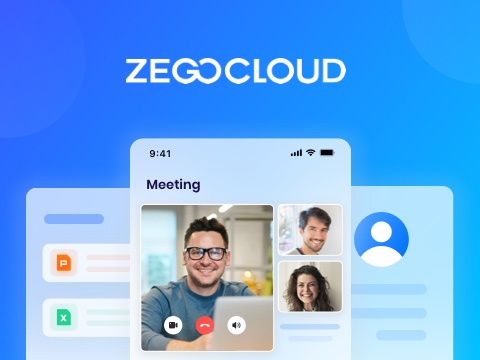
One of the strongest choices for Unacademy-like apps is ZEGOCLOUD because it gives you ready-made building APIs. Its engine works across 1500-plus device models, supports up to 4K video with adaptive quality, and keeps calls stable. Moreover, Video Call SDK includes a screen-sharing feature that helps teachers elaborate on and explain their perspective. You can record video streams for later review and playback at your convenience.

With its Live Streaming API, instructors can interact with their students at a low latency of less than 300ms. Users can enhance live videos from low resolution to high resolution using the Super Resolution feature. Additionally, integrate the In-app Chat SDK to enable one-on-one chat with a student to address their queries. Impressively, you can conduct a group chat with multiple students or teachers on a specific course or topic.

👉 Talk to Sales

How Much Does It Cost to Develop an App Like Unacademy

Estimating the cost to build a similar Unacademy learning app depends on several factors, including feature complexity. Therefore, the listed components collectively show the final cost to create a competitive e-learning platform like Unacademy:

StageWhat it CoversEstimated Cost Range
Discovery and PlanningMarket research, scope, and basic documentation$2,500-$5,000
UI/UX DesignUser flow, wireframes, and visual design for apps/web$3,500-$7,000
Frontend (mobile & web)Android, iOS, and web interface learners and teachers use$18,000-$28,000
Backend and APIsServer logic, database, APIs, and admin panel$11,000-$19,000
QA & TestingManual + automated testing on devices, fixing bugs$3,000-$6,000
Launch & DeploymentStore publishing, basic DevOps setup.$7,00-$1,300
Basic MVP TotalA simpler Unacademy-style MVP with limited features$25,000-$35,000
Full Product TotalRich Unacademy-like app with core features$38,000-$66,000
Enterprise-Grade PlatformLarge-scale platform with advanced live streaming + AI integration$250,000-$500,000+
Standard Education App RangeGeneral range for education apps, from basic to very advanced.$25,000-$300,000+

How Long Does It Take to Develop a Unacademy-Like App?

Developing a complete Unacademy-like app usually takes about 4 to 8 months with a skilled team. Research shows that a strong e-learning app with main teaching and management features often needs around 6 months to build. However, an app with medium-to-complex features typically takes more than 9 months to develop.

If you build only a basic MVP (Minimum Viable Product), the development process can be faster. According to Netguru, a simple first version of an app can be ready in about 3-4 months. Thus, a detailed e-learning product typically takes 12 months, after which you continue adding features.

Conclusion

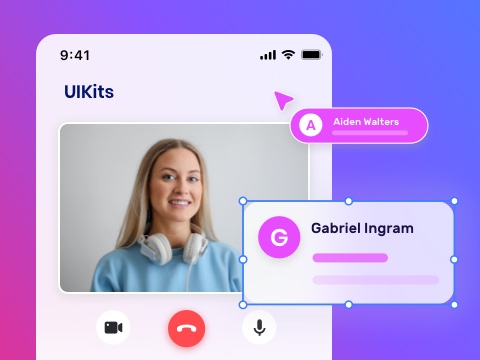
In conclusion, we’ve found that e-learning apps like Unacademy have set a strong benchmark with live informational classes. For such a successful app, a well-planned learning model, user-focused features, and reliable infrastructure are needed, as explained. However, ZEGOCLOUD is introduced as an immense solution for developing a high-performance app with its pre-installed 20+ UIKits.

FAQ

Q1: How to make an e-learning app like Unacademy?

Start by defining your learning niche and target users, then design core features such as courses, live classes, and assessments. Use ready-made SDKs for live video and interaction to speed up development, and focus on scalability from day one.

Q2: How to start an eLearning platform?

To start an eLearning platform, choose a specific education segment, validate demand, and build an MVP with essential features like content management, live or recorded classes, and user analytics. You can later expand with subscriptions, exams, and certifications.

Q3: Can I create my own LMS?

Yes, you can build your own LMS by developing custom modules for user management, course delivery, and progress tracking. Compared to off-the-shelf LMS tools, a custom LMS gives you more flexibility in features, branding, and monetization.

Q4: How to create an educational app?

Creating an educational app involves defining learning goals, designing an intuitive user experience, building learning content and interaction tools, and testing across devices. Many teams use third-party APIs for video, chat, and analytics to reduce development time.

Q5: What features are essential for an e-learning app?

Core features usually include user accounts, course catalogs, video lessons, live classes, quizzes, progress tracking, and payments. Advanced apps may also support real-time interaction, analytics dashboards, and content moderation.

Let’s Build APP Together

Start building with real-time video, voice & chat SDK for apps today!

Talk to us

Take your apps to the next level with our voice, video and chat APIs

Free Trial
  • 10,000 minutes for free
  • 4,000+ corporate clients
  • 3 Billion daily call minutes

Stay updated with us by signing up for our newsletter!

Don't miss out on important news and updates from ZEGOCLOUD!

* You may unsubscribe at any time using the unsubscribe link in the digest email. See our privacy policy for more information.