Talk to us
Talk to us
menu

What Is Text-to-Speech (TTS)?

What Is Text-to-Speech (TTS)?

Digital communication has never been more important globally, and individuals require convenient methods to interact. Such growing demand for natural voices makes text-to-speech a key tool for connection. This basically helps students and creators save time while improving accessibility. Plus, it turns written words into spoken voice quickly, making learning and information sharing simpler. Thus, this guide will help you explore how this technology works and why it matters.

What is Text to Speech?

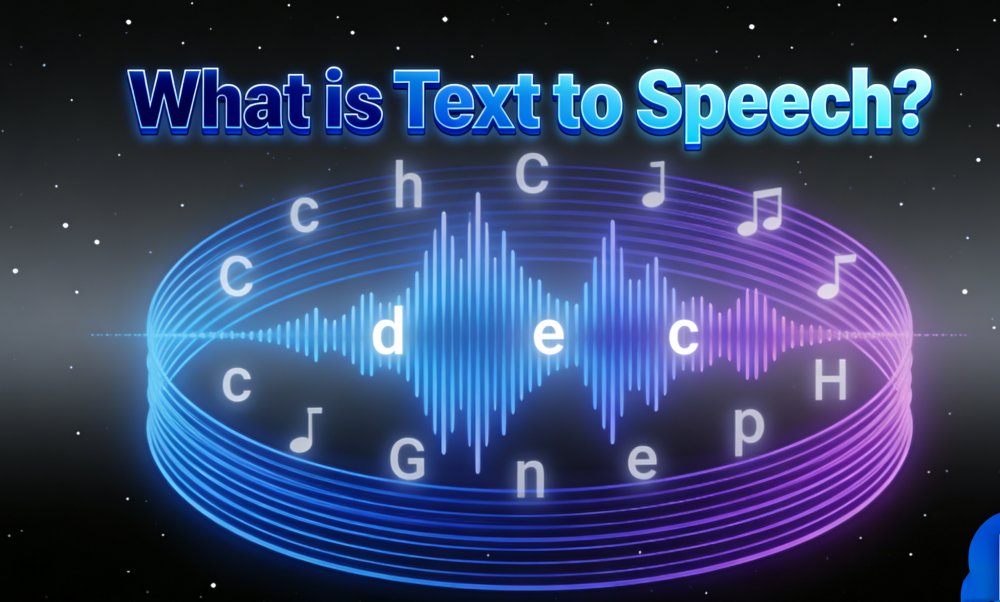
It is also referred to as TTS, which is a technology that turns digital text into speech through AI voices. Plus, the process examines several factors, such as letters and rhythm, to come up with natural and realistic speech. This process helps transform written content into sound that feels human and expressive. In addition, a vocoder converts this processed data into audio that mimics human speech.

The system relies on processing text patterns and vocal synthesis to deliver clear pronunciation. Moreover, text-to-voice solutions now power navigation systems and virtual assistants. Hence, many people also use it for accessibility, which enables effortless communication and easier content understanding across devices.

The Evolution of TTS Technology

The journey of this technology shows how machines learned to talk like humans over time. Also, each stage added realism, emotion, and control, shaping how voices sound across modern devices. So, this part shows you the evolving technology of TTS:

  • Mechanical Roots: Early devices physically modeled human vocal tracts to produce basic sounds accurately. Plus, experiments in the 18th and 19th centuries laid the foundation for future speech technology.
  • Electronic Voices: Bell Labs’ VODER in the 1930s created electronic speech, though robotic and unnatural sounding. Later, it proved that machines could generate AI voices reliably for the first time.
  • Formant Synthesis: From the 1950s to the 1980s, mathematical models simulated vocal tract resonances for speech sounds. Moreover, systems like DECtalk produced robotic yet intelligible voices widely used in communication aids.
  • Concatenative Speech: Between the 1980s and the 1990s, small human speech snippets were merged to enhance naturalness much more. So, this method allowed TTS in consumer software and educational applications.
  • Neural TTS: Since 2016, deep learning has generated natural, expressive speech directly from text. Thus, modern text-to-speech systems replicate human intonation and emotion almost perfectly.

How Does Text-to-Speech Work?

Understanding how text-to-speech software works helps users choose better tools for daily communication. Below, you will explore a detailed working through several steps that ensure a realistic output:

1. Text Analysis

Text analysis prepares written input by cleaning and interpreting language before voice generation. Moreover, it expands abbreviations, corrects symbols, and formats numbers or dates for accurate pronunciation. Besides, the system identifies grammar patterns and predicts natural pauses within sentences. Thus, this process defines what text-to-speech is through structured linguistic understanding.

2. Prosody Generation

Prosody generation shapes the rhythm, tone, and emotion that give voice a natural flow. Furthermore, it predicts pitch variations and loudness to create an expressive speech. Besides, the system adjusts intonation patterns, ensuring communication feels human and emotionally connected. Hence, understanding this process explains how to use text-to-speech effectively.

3. Acoustic Feature Generation

It basically converts processed phonemes and prosody into rich acoustic patterns for synthesis. This stage also creates spectrogram patterns showing how frequencies change and shape audible speech tones. Moreover, it defines the clarity and texture that make synthetic voices sound more realistic. Therefore, these features form the foundation for converting speech models into natural sound.

4. Waveform Generation

Waveform generation converts acoustic patterns into audible sound waves ready for playback through devices. Plus, it uses advanced vocoders that convert spectrogram details into smooth waveforms for natural speech. Additionally, this produces a sound sample-by-sample to improve clarity and reduce unwanted robotic qualities.

5. Voices Output and Customization

This final part allows users to select accents, tones, and expressive speaking styles easily. Moreover, it offers multiple genders, accents, and tones created from carefully trained speaker recordings. Also, advanced tools adjust pitch, rate, and emotion for personalized listening experiences across platforms. So, these controls define text-to-speech meaning through adaptive voice creation.

Choosing the Right TTS Model for Your Application

Opting for the right TTS model depends on your goals, audience, and interaction style. Hence, the following part covers a few key points to ensure stable text-to-speech output:

  • Use Case: Define whether you need real-time communication or long content narration experiences. Also, different goals demand unique model strengths to ensure smooth audio flow and listener satisfaction.
  • Voice Quality: Compare models using naturalness tests that reveal rhythm clarity and pronunciation detail. Plus, neural engines deliver richer tones, but increase compute usage during constant audio generation.
  • System Load: Measure latency and output rate to maintain swift responses under pressure. Therefore, lightweight engines perform better for instant dialogues, whereas larger ones suit immersive media rendering.
  • Language Coverage: Select systems offering multiple dialects and accent flexibility for multilingual experiences. Besides, some engines offer deep customization, while simpler APIs restrict adjustments to basic presets.
  • Deployment Fit: In addition, compare cloud platforms and edge devices for the best operational fit. So, you should verify SDK support, SSML controls, and monitoring tools for seamless integration across workflows.

Why Choose ZEGOCLOUD Conversational AI for Real-Time Voice Interaction

For developers, ZEGOCLOUD is highly recommended for those seeking to develop reliable, high-performance text-to-speech software. Moreover, it offers a dedicated Conversational AI API that provides ultra-low latency performance under 300ms. This platform also offers 100+ advanced AI voices and expressive effects for engaging user experiences. Its global cloud infrastructure even includes 500+ nodes across 212 countries to ensure stable and scalable coverage worldwide.

In addition, ZEGOCLOUD supports powerful LLM compatibility with OpenAI and Minimax for dynamic language understanding capabilities. The SDK integrates easily with automatic speech recognition vendors to improve real-time comprehension accuracy and efficiency. Moreover, an integrated agent template library even allows users to design diverse, intelligent conversational assistants effortlessly. Thus, it lets developers create multiple AI assistants for varied applications.

Conclusion

In conclusion, text-to-speech technology transforms written content into natural and expressive audio. It also improves accessibility and communication across devices, benefiting students and professionals. Apart from that, choosing the right TTS model ensures clear voice quality, low latency, and language flexibility.

As creativity and accessibility keep growing, dependable tools become increasingly essential for real-time voice interaction. For seamless real-time voice interaction with advanced AI features, you should use ZEGOCLOUD.

Read more:

Text to Speech AI: A Developer’s Guide

FAQ

Q1. What is text to speech and how does it work?

Text to speech (TTS) is a technology that converts written text into spoken audio. It works by analyzing the text, understanding linguistic features such as pronunciation and intonation, and then generating synthetic speech using speech models so the output sounds natural and human-like.

Q2. What is the meaning of text to speech?

Text to speech refers to the process of transforming written content, such as articles or messages, into audible speech. It allows users to listen to text instead of reading it on a screen.

Q3. What is the purpose of speech to text?

Speech to text is designed to convert spoken language into written text. Its main purpose is to make voice input usable for applications like transcription, voice commands, accessibility tools, and real-time communication systems.

Q4. Why do people use text to speech?

People use text to speech to improve accessibility, consume content hands-free, reduce screen fatigue, and enable audio-based experiences across devices. It is commonly used in education, navigation, customer support, and AI-powered applications.

Let’s Build APP Together

Start building with real-time video, voice & chat SDK for apps today!

Talk to us

Take your apps to the next level with our voice, video and chat APIs

Free Trial
  • 10,000 minutes for free
  • 4,000+ corporate clients
  • 3 Billion daily call minutes

Stay updated with us by signing up for our newsletter!

Don't miss out on important news and updates from ZEGOCLOUD!

* You may unsubscribe at any time using the unsubscribe link in the digest email. See our privacy policy for more information.