





Many businesses and developers struggle to create natural, real-time voice experiences that feel human and responsive. Hence, Cartesia AI offers a solution with ultra-fast, high-quality text-to-speech technology used in interactive agents, games, and customer support. Thus, review this guide and learn how it helps companies build natural, scalable, and cost-efficient voice interactions for modern applications.
What is Cartesia AI?
Cartesia AI is a startup that builds real-time AI models, best known for fast and high-quality voice and text-to-speech technology. Its tools support interactive agents, games, and customer support, and help businesses to create a natural voice experience. Additionally, the company focuses on multimodal intelligence, handling text, audio, and other signals efficiently on cloud and on-device systems.
Key Features of Cartesia AI
Innovative features of Cartesia Voice include powerful AI tools and seamless voice interaction. It offers innovative responses, easy commands, and efficient task management, and a few of them are listed below for clarity:
1. Real Time Streaming TTS
It offers ultra-fast TTS Sonic Models that work for live conversations, voice agents, and games. Thus, the system can start speaking while the text is still ready or while the user is giving the input. As a result, this allows smooth, natural conversation without any delay.
2. Natural, Expressive Voices
Cartesia AI sounds natural, and users can choose from emotions, speed, and volume when creating speech. Additionally, companies can add custom pronunciations to match different needs, such as customer support, sales, or gaming.
3. Multimodal and Model Design
The AI uses multimodal state space models to handle audio and text efficiently in real time. Users can choose from Sonic 3.0 Latest to Stable or Sonic Turbo for faster and higher-quality processing. Hence, with the option to switch the theme from dark to bright while customizing, you can redo the process. Besides, you can leverage Cartesia’s ability to work in the cloud, on devices, or at the edge, providing fast responses and keeping privacy secure.
4. Developer-Friendly API
When comparing Cartesia vs ElevenLabs, one notable aspect is that Cartesia AI provides simple HTTP and WebSocket APIs, along with SDKs, for easy integration. Thus, developers can select voices, languages, and styles, and check usage for production workloads.
5. Multi-Language Support and Scalability
Additionally, the system supports many languages and accents for global use. One can choose Voice based on gender, tags, and any language tab for large contact centers or consumer apps. Besides, you can save them for easy access and pick Transcript Language from 20+ options.
6. Access History and Other Voice Features
While using the TTS feature, users can access the history of previously generated voices. Besides that, one can use Cartesia AI to clone voices by adding recorded input from a prerecorded file. You can also localize a voice or change it to different accents, tones, or styles for natural, expressive, and personalized voice output.
Pros and Cons of Cartesia AI
Before you use Cartesia API, it’s essential to weigh its pros and cons to determine if it’s worth integrating. Therefore, this section offers a clear look at the advantages and limitations of Cartesia AI below:
Pros
- Ultra-low latency voice works well for live, gaming, and real-time apps.
- High-quality voices make it easy to support emotion, style, and custom branding.
- Modern multimodal design works for streaming, cloud, and device use.
- Developer-friendly APIs integrate with platforms and use monthly or yearly pricing.
- Strong investor support shows active development and fast feature growth.
Cons
- Features focus on voice; other AI needs may need partners.
- Pricing and limits can change, causing planning uncertainty sometimes.
- Enterprise rules or data needs may require direct vendor contact.
- Manual tuning slows workflow; adjust pitch, speed, and emotion yourself.
- Character limits force splitting long texts, adding extra work.
Use Cases of Cartesia AI
As Cartesia AI focuses on TTS and voice, you might wonder where you can use it for interactive applications. Thus, this section has listed 5 ideal use cases for this system to help you enhance voice-driven experiences.
1. AI Customer Support Agents
Cartesia AI powers voice bots on phone lines or in-app calls that speak naturally and respond fast. The system supports barge-in, so users can interrupt or give input while the bot talks. Additionally, companies automate FAQs, triage, and simple workflows, while complex issues are routed to human agents with minimal delay.
2. Sales and Outbound Calling
AI agents handle calls to leads, qualify them, and book appointments using expressive, persuasive voices. Besides, low latency and voice style control make speech more engaging and less robotic. Additionally, developers can adjust pitch, speed, and emotion to improve call pickup and conversion rates.
3. In-Game and Interactive Characters
Cartesia AI provides real-time dialogue for NPCs and game characters that react to player actions. Developers can also set voice personalities, emotions, and styles. Plus, multilingual support reduces costs and improves player experience.
4. Voice-Enable Existing Apps and Tools
AI in apps for learning, productivity, or accessibility can read content aloud on demand. Hence, developers can use the TTS API to narrate lessons, instructions, or notifications. Moreover, low latency and multiple languages provide natural, clear voice output.
5. Real-Time AI Copilots and Assistants
AI copilots in coding or workflow tools talk while they process tasks. So, speech starts before complete answers appear, giving human-like guidance. Plus, developers can control voice style, speed, and language for smooth support.
Cartesia AI Pricing
Cartesia pricing is a significant concern for emerging developers, as it can affect project budgets and long-term affordability. Therefore, this section breaks down the startup’s total cost to help you determine whether it fits your budget.
| Monthly/Yearly | Pricing |
|---|---|
| Monthly | Pro: $5/month Startup: $49/month Scale: $299/month |
| Yearly | Pro: $4/month Startup: $39/month Scale: $239/month |
Top 5 Cartesia Alternatives
For users who seek Cartesia AI substitutes, regardless of the reason, here are 5 options you can opt for:
1. ElevenLabs
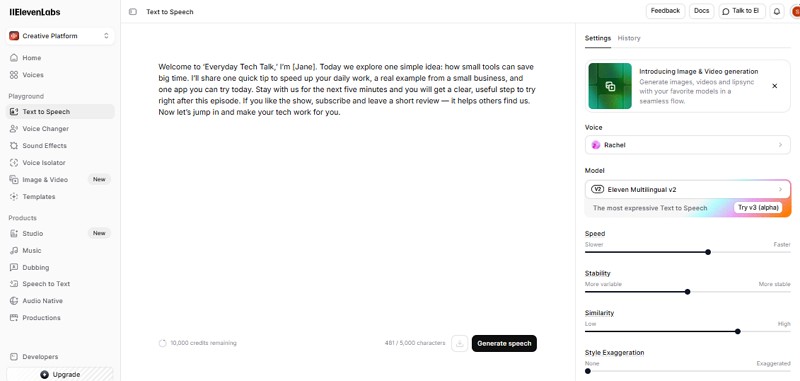
With the option to choose from over 70 languages, this is an ideal option if Cartesia pricing was your concern. Hence, this tool offers natural and human-like voices where users can have control over style, emotion, and voice similarity. Additionally, the platform supports long-form voiceovers, podcasts, audiobooks, and AI dubbing into multiple languages.
Key Features
- Developers can use APIs and SDKs to add TTS, cloning, and dubbing into apps.
- Choose from various language models and access history for easier reference and improved workflow.
- One can regenerate the speed or download the generated one for later usage.
2 Deepgram
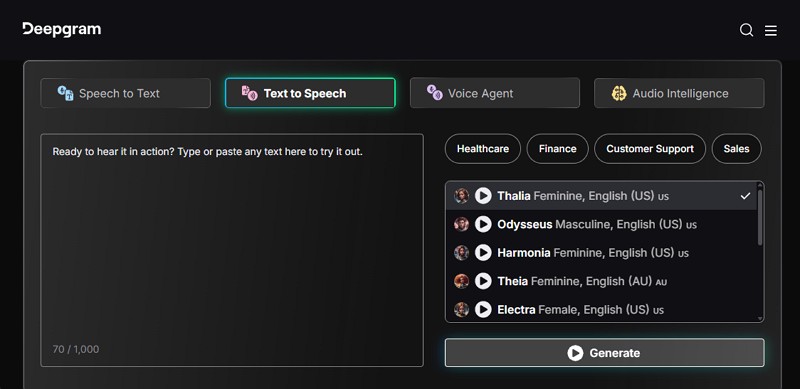
This Cartesia AI substitute offers you STT and TTS features with the option to choose from multiple languages. Additionally, you get the option to add input with 1000 characters, and you can generate voices for various use cases. It even provides real-time and batch transcription for noisy audio, calls, and multi-speaker meetings, with automated punctuation and casing.
Key Features
- Organizations can use custom models for terms, accents, names, plus speaker and language insights.
- APIs and SDKs enable easy integration with apps, contact centers, and analytics platforms.
- Streaming APIs provide instant transcripts, and cloud or on-prem options handle large workloads.
3. Murf AI
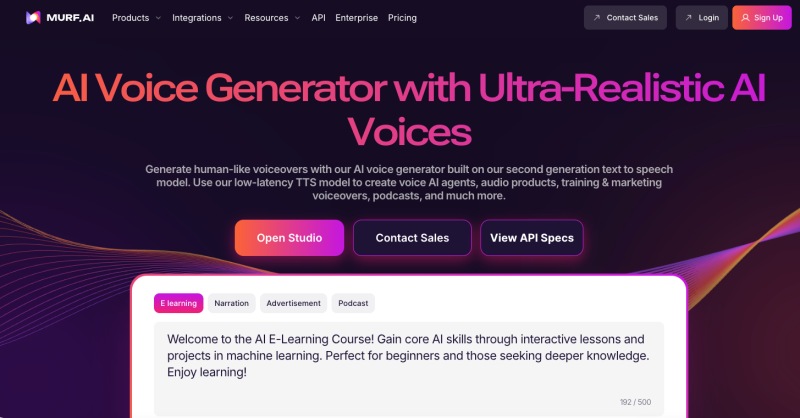
Murf AI is a text-to-speech platform focused on high-quality AI voice generation for narration, presentations, and product experiences. It offers a broad library of natural-sounding voices across multiple languages and provides API access for developers who need to embed voice features into applications. Murf AI is commonly used for explainer videos, onboarding flows, and branded voice experiences.
Key Features
- Natural-sounding text-to-speech with multiple languages and voice styles
- API access for integrating AI voice generation into apps and workflows
- Voice customization options such as pitch, speed, and emphasis
4. Amazon Polly
Amazon Polly is AWS’s text-to-speech service designed for scalable, production-ready voice generation. It converts text into lifelike speech using neural voices and is widely used in customer service systems, IVR, accessibility tools, and large-scale applications. While it may not focus on ultra-low-latency voice like Cartesia, it remains a reliable alternative for teams prioritizing stability and cloud integration.
Key Features
- Neural text-to-speech with multiple languages and voice styles
- Seamless integration with AWS services for enterprise use cases
- Suitable for high-volume, cost-efficient, and stable voice generation
5. Retell AI
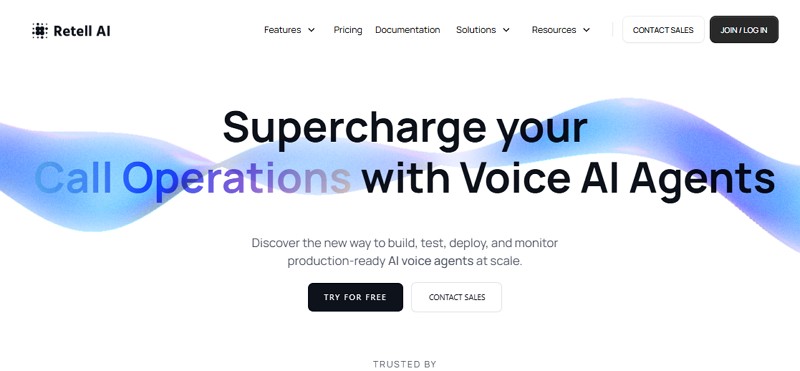
Retell AI is a voice-agent platform that automates phone calls and support conversations, similar to Cartesia AI but focused on full call workflows. It also offers real-time voice streaming with sub-second latency, handling turn-taking, interruptions, and background noise for natural calls. This platform supports built-in telephony and BYOC (Bring Your Own Carrier) services, including Twilio, Telnyx, and Vonage.
Key Features
- Features voicemail detection, call transfers, IVR navigation, and large-scale outbound dialing.
- Retell AI uses LLMs like GPT‑4o for reasoning, calls, and dynamic chats with APIs.
- It offers configuration, analytics, compliance, and supports thousands of simultaneous calls.
While these tools provide strong text-to-speech and voice generation capabilities, they mainly focus on converting text into audio. For real-time voice interactions and conversational experiences, developers often need an additional real-time communication layer to handle low-latency audio streaming, turn-taking, and live user interactions.
Why ZEGOCLOUD is Best for Real-Time Voice Interactions
When comparing Cartesia vs ElevenLabs, ZEGOCLOUD stands out for handling real-time voice interactions efficiently. This advanced platform offers voice SDKs for mobile, web, and cross-platform apps, with echo control, noise reduction, and clear sound quality. Additionally, it supports one-to-one calls, group chats, voice rooms, and exceptional use cases like games or live shows.
Furthermore, ZEGOCLOUD includes AI voice agents, audio effects, and voice tools. With strong uptime, monitoring tools, and easy scaling, it fits both small apps and large global services. Not just that, users can benefit from multimodal interaction with the AI Agent SDK, where they can also personalize the persona. While interacting with AI in a group or individually, users can also transition from video to audio and text calls.
Conclusion
To wrap up, this guide has reviewed Cartesia AI to help developers understand if its features, pricing, and voice quality fit their project needs. So, if the need for a substitute is raised, it is suggested to opt for the 5 listed options. However, for real-time voice interactions and scalable live communication, ZEGOCLOUD stands out as a strong recommendation.
Let’s Build APP Together
Start building with real-time video, voice & chat SDK for apps today!
