






Many enterprises are navigating an environment defined by rapid change, rising customer expectations, and increasing operational complexity. In such a landscape, the need for B2B SaaS has become both evident and urgent. Moreover, fragmented tools and legacy systems are no longer sufficient to keep pace with the pace at which businesses operate. For a business to function at a foundational level, the guide below covers everything about B2B SaaS.
What is B2B SaaS?
B2B SaaS means business-to-business software-as-a-service, where a company delivers software to other businesses over the internet, typically through a monthly or yearly subscription. Instead of installing large programs on local servers, users simply access the platform through a browser or an app. Once logged in, the SaaS provider handles hosting, updates, maintenance, and security, allowing businesses to focus on using the software rather than managing it.
In simpler terms, B2B SaaS means “rented” online software that helps businesses do their daily work faster and more easily. Additionally, its duties include managing customers, tracking projects, and handling payroll. The customer is always a business, and they keep paying as long as they continue to get value from the product. This makes revenue predictable for the software company and gives customers constant improvements without buying new versions.
How Does B2B SaaS Work?
For a better understanding of its mechanics, explore this section, and know how B2B SaaS companies design or deliver solutions:
1. Software Lives Online (Cloud)
Here, in B2B SaaS, the whole application runs on servers in the cloud instead of on your company’s own machines. The provider usually uses big cloud platforms like AWS or Azure, offering strong hardware, global data centers, backups, and automatic scaling. Thus, your team only needs an internet connection and a browser to use the tool, without managing expensive servers.
2. No Installs, Just Log In
With B2B SaaS, you don’t install anything; the provider hosts the application, and you see features or data upon signing in. This “just log in” model makes it quick to add new users; an admin simply creates an account and assigns a role. Moreover, it reduces downtime because whenever the provider releases new features, everyone sees them right away.
3. Shared System, Separate Data
Most B2B SaaS products use a multi-tenant model, meaning many different customers share the same main application and infrastructure. Although they share the system, each company’s data is logically separated and protected, so that one business cannot see the other’s information. Hence, this shared approach makes it cheaper and faster for the provider to roll out updates because they maintain one main codebase.
4. Pay with Subscriptions
Instead of paying once for a license and buying servers, companies pay for B2B SaaS through recurring subscriptions. Plans are usually monthly, yearly, or multi-year, and pricing can be based on the number of users, usage, and features. Additionally, this subscription model turns high upfront costs into smaller, predictable operating expenses. This way, finance teams can plan budgets and adjust plans as the company grows or declines.
5. Works with Other Tools
SaaS and B2B tools are built to connect with other business systems; they provide APIs and SDKs. This way, developers can send and receive data between apps or embed features like chat and notifications into other products. Moreover, these connections reduce manual work, such as copying data between spreadsheets and systems. They help keep information in sync across departments, so sales and finance are looking at the same updated record.
6. Uses Analytics and AI to Improve
Most B2B SaaS tools include dashboards and reports that show how the software is being used. Businesses can analyze which features are popular when usage is highest and where users drop off or get stuck. In addition, providers track metrics like churn rate, Monthly Recurring Revenue (MRR), and Customer Acquisition Cost (CAC) to understand.
Types of B2B SaaS Products
To understand the full scope of solutions available, it’s equally important to explore how B2B SaaS offerings are categorized. Each category below is made to solve specific challenges, improving scalability according to industry needs:
1. Horizontal B2B SaaS
Horizontal B2B SaaS products are tools that any kind of business can use, no matter what the industry. They solve general problems such as tracking customers, managing projects, communicating with teammates, handling finances, and managing staff.
The common examples include Salesforce or HubSpot, project tools like Asana or Monday.com, and chat tools like Slack or Zoom. In addition, these products usually target very large markets because they sell to many different types of companies. There is a lot of competition, so they must stand out with a clean design, competitive pricing, and strong support.
2. Vertical B2B SaaS
To understand what B2B SaaS vertical type is, simply know that these products are made for one specific industry or niche. Instead of trying to serve every business, they go deep into one field, such as healthcare, construction, or real estate. However, famous examples of this type include Veeva for life sciences, Procore for construction, and Toast for restaurants.
These tools often include industry-specific forms, reports, and compliance rules that generic software does not cover. Whereas the market size is smaller than that of horizontal SaaS, there is usually less competition.
B2B SaaS vs B2C SaaS
A comparison below between B2B SaaS and B2C SaaS helps clarify why each model follows a different approach overall:
| Aspects | B2B SaaS (Business to Business) | B2C SaaS (Business to Consumer) |
|---|---|---|
| Main Customer | Companies and teams (small to large) | Individual people (end users) |
| Number of Users | Fewer customers, each paying more | Many customers, each paying less |
| Sales Cycle | Slower; weeks to many months, especially for big firms | Faster, minutes to a few hours online |
| Decision Maker | Several people, such as managers, finance, IT, and legal. | One user or family decides alone |
| Key Goal | Help businesses work better, save time, and grow revenue | Personal use, fun, learning, or daily life tasks |
| Estimated Pricing | Higher, around $50-$50,000+ per month per account | Lower, around $5-$50 per month per user |
| Common Examples | Salesforce, HubSpot, Slack, and Workday | Netflix, Spotify, Duolingo, and Canva |
B2B SaaS Revenue Models
Broadly, B2B SaaS companies’ revenue models are built around recurring subscriptions, with monthly or annual billing. Moreover, common approaches include per-seat pricing (pay-per-user), usage-based pricing, or bundled “Starter/Pro/Enterprise” plans. Many tools are free trials or freemium plans to let businesses test the products first, then convert them to paid plans. In recent years, B2B SaaS has focused on growing predictable recurring revenue and expanding existing customers.
However, benchmarks for 2025-2026 show median Net Revenue Retention around 101-106%, meaning the SaaS company grows revenue from current customers each year. The SaaS Market Trends report portrays around 5,000-15,000 for SMB customers, 15,000-50,000 or more for mid-market, and 50,000-25,000+ for enterprises. That is why enterprise B2B SaaS can afford long, sales-driven motions while smaller ACVs rely on self-serve.
Key Features of Successful B2B SaaS Companies
The listed attributes reflect how well a B2B SaaS company can deliver value and sustain long-term growth:
- Solve a Real, Painful Problem: Successful B2B SaaS companies focus on a clear business problem, like lost sales, slow workflows, or messy data. Furthermore, their products are deeply integrated into daily work, so customers feel real pain if they stop using them.
- Strong Product–Market Fit: They build for a specific customer segment and keep improving the products until those customers love them. Plus, signs of a good fit include high usage, positive feedback, and customers upgrading or telling others without heavy sales pressure.
- Predictable Recurring Revenue: Many successful companies earn money through subscriptions, creating predictable income rather than a one-time deal. The best B2B SaaS companies watch key numbers like churn, Net Revenue Retention (above 100%), and CAC playback under 12 months.
- High Margins and Scalable Model: Just because the software is hosted in the cloud and reused, serving another customer is relatively inexpensive. This is why top SaaS companies operate at 70-80% gross margins, leaving plenty of money to reinvest in products and marketing.
- Efficient Customer Acquisition: Winning customers is not considered random; successful SaaS companies have repeatable ways to get customers at a cost. Moreover, they use channels like content/SEO, product-led growth, outbound sales, paid ads, and partnerships.
- Data‑Driven Decisions: Most companies track key metrics such as MRR/ARR, churn, NRR, CAC, LTV, feature usage, and support trends. So, features that do not help retention or revenue are reduced, and those that drive usage and upgrades get more attention.
5 Examples of Leading B2B SaaS Companies
With what a B2B SaaS company is and how it works, exploring real-world examples of such organizations helps in better understanding.
1. Salesforce
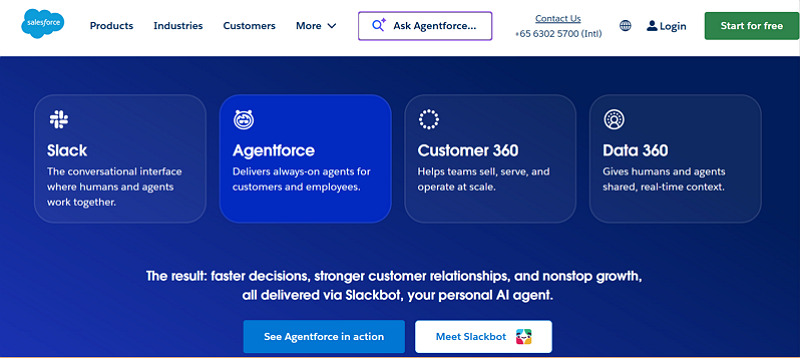
Salesforce is a leading B2B SaaS company that provides cloud-based customer relationship management (CRM) software. Businesses use it to track leads, manage pipelines, support customers, and analyze performance in one place, rather than using separate tools. However, Salesforce grew by being an early mover in cloud CRM and then expanding into areas like service, marketing, and analytics.
2. HubSpot
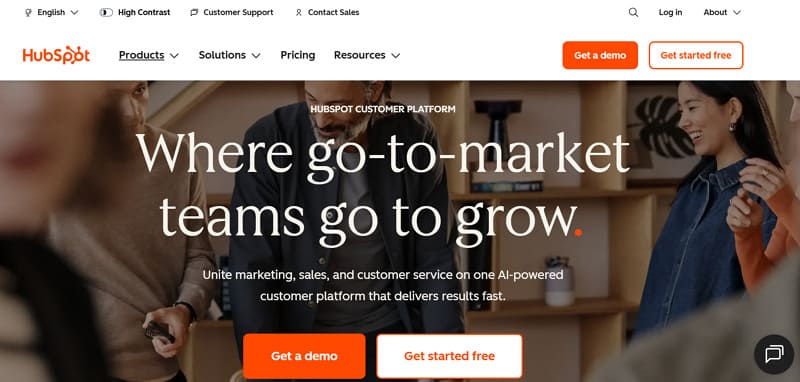
HubSpot offers an all‑in‑one platform for marketing, sales, and customer service, mainly helping businesses attract leads and turn them into customers. It includes tools for email marketing, websites, CRM, and automation, with a free version that many small businesses start with. In addition, it became successful through content marketing, a freemium model, and a simple user experience.
3. Slack
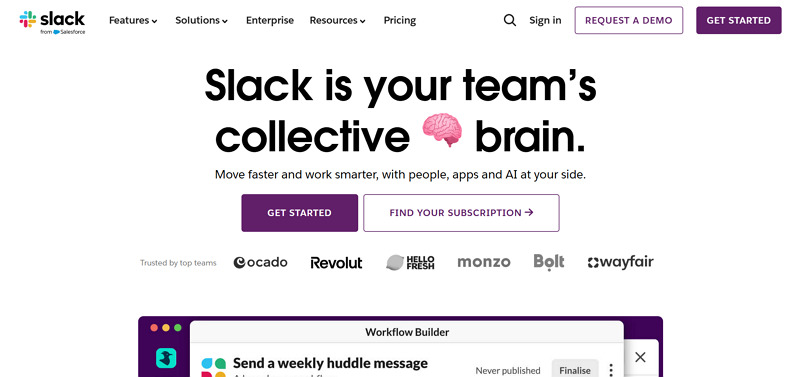
Slack is a B2B SaaS messaging tool that helps teams communicate and collaborate in channels instead of long email threads. Furthermore, companies use it to send messages, share files, integrate with other tools, and organize work by projects or departments. Slack grew rapidly because small teams could start for free, easily invite others, and then upgrade to paid plans to unlock additional features.
4. Workday
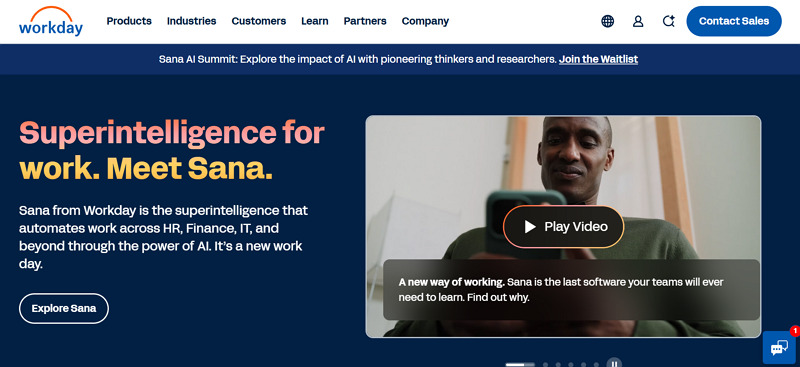
Workday is a cloud-based platform for HR, payroll, and finance, used primarily by medium- to large-sized companies to manage employees. Moreover, it helps with tasks like hiring, reviews, time off, and budgeting, replacing old on-premises systems that were hard to update. Moreover, Workday’s focus on large enterprises, strong compliance, and a single unified platform makes it a key system of record.
5. Shopify
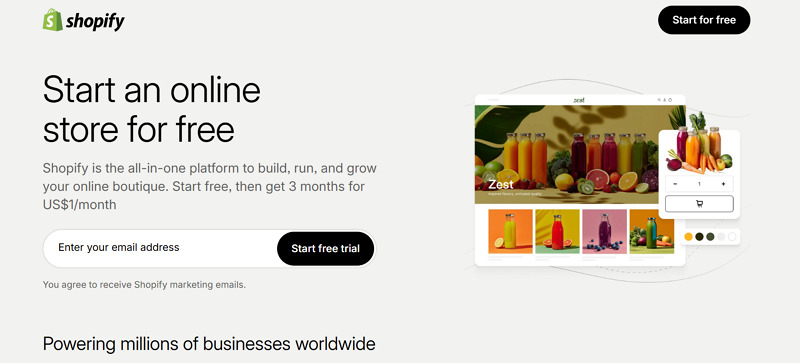
It’s another platform that lets businesses create and run online stores without needing to build everything from scratch. Moreover, Shopify provides tools for product pages, payments, shipping, and inventory with an app store for extra features. Many brands use Shopify because it is easy to start, scales to large volumes, and offers a large ecosystem of apps.
How to Build a B2B SaaS Startup
Once you know what B2B SaaS is, the question is how this model serves as the foundation for modern software-driven businesses. For your assistance, the section below will help you understand how to shape the right strategy, product direction, and value proposition:
1. Begin with a Clear Problem
First, pick a specific business problem you want to solve, like slow customer support, confusing reporting, or hard‑to‑manage projects. After this, talk to relevant real companies, learn how they work today, and make sure the problem is actual. Moreover, consider a problem that is frequent and important enough that they would pay for a better tool.
2. Specify Your Niche and Customer
Now, decide whether you want to build a horizontal or vertical tool based on your problem. Besides this, define your ideal customer very clearly, so you can design features, pricing, and marketing that fit them well. This step is important because a clear niche helps design features, messaging, and onboarding that speak directly to that customer.
3. Build a Simple MVP First
Instead of trying to build a “complete” product, create a Minimum Viable Product (MVP) that focuses on the one core job. However, it can be a simple dashboard, a basic workflow, or one key automation that saves a lot of people’s time. Plus, the MVP should be good enough that a small group of early customers can actually use it in their real work.
4. Integrate Real‑Time Features with ZEGOCLOUD
If your B2B SaaS needs real-time communication, such as video meetings between customers and support, use ZEGOCLOUD APIs/SDKs. This way, you won’t need to build from scratch, as it provides ready-made SDKs for audio and video calls. Moreover, you can offer features such as 1:1 calls, group meetings, webinar-style sessions, or live support inside your product.
It will make your SaaS much more engaging and useful, especially in industries such as telehealth, online education, and customer support. Additionally, ZEGOCLOUD will reduce development time from months to weeks while still offering features such as screen sharing and recording.
5. Plan Your Go‑to‑Market and Growth
Decide how you will reliably find and convert customers, rather than hoping they “show up.” Two common paths are sales‑led (outbound emails, calls) and product‑led (free trials, freemium, self‑serve signup), and many companies mix both. Start with 1-2 main channels and measure them closely; how many leads you get and how many become paying customers.
6. Watch Your Key SaaS Metrics
Any successful B2B SaaS founder runs the business by numbers, not just by gut feelings. Therefore, track your Monthly Recurring Revenue (MRR) and Annual Recurring Revenue (ARR) to see how fast you are growing. Plus, measure churn, Net Revenue Retention, CAC (cost per customer acquired), and LTV (total value of a customer over time).
7. Choose the Right Funding Path
Finally, think about how you will finance your growth, either by bootstrapping from customer revenue or raising equity from investors. There are more options like revenue-based financing and SaaS loans, which give you cash-based revenue without giving away ownership. However, the best choice depends on your risk level, growth ambition, and how quickly your product is catching on.
Common B2B SaaS Challenges
Even though the B2B SaaS meaning suggests significant advantages, companies operating in the same space face many challenges. To know them in detail, read the following section thoroughly and overcome them in your own startup:
- Rising Customer Acquisition Costs: Many B2B SaaS companies struggle because they keep getting more expensive to win new customers. Additionally, ads cost more, inboxes are full of sales emails, and buyers compare many tools before deciding.
- Churn and Keeping Customers: Another point to consider is that getting a customer is not enough if they cancel after a few months. Moreover, high churn (customers leaving) quickly kills growth, because you are always replacing revenue you already had.
- Making Space in a Crowded Market: There are many SaaS tools for CRM, project management, marketing, and more, so buyers see lots of similar options. A common challenge is showing why your product is meaningfully different, not just slightly better.
- Long Enterprise Sales Cycles: Selling to big companies can take a long time because you require security checks, legal reviews, and approval from decision‑makers. Besides this, deals can take 6-8 months, which is hard for young startups with limited cash and small teams.
- Cash Flow and the “SaaS Cash Trap”: In SaaS, you spend money first (on product, sales, and marketing) and recover it slowly through monthly or yearly fees. When you grow quickly, this gap grows and can create cash‑flow stress, even if the business is healthy.
How ZEGOCLOUD Supports B2B SaaS Product Development
ZEGOCLOUD makes it easier for B2B SaaS companies’ startups by incorporating real-time APIs such as Voice and Video calls. Apart from this, the platform handles complex tasks, including low-latency streaming, global network routing, and connection stability. This way, developers can focus on how these features fit into their workflows and improve the user journey. Moreover, the integration of in-app meetings, support calls, and interactive classrooms works across web and mobile.
It supports a high level of customization, making the communication experience look and feel like part of your own product, not a separate tool. Additionally, you can adjust the UI layout, branding roles, and permissions to suit different use cases, such as virtual lessons. As your user base grows, ZEGOCLOUD’s infrastructure is built to handle more concurrent users and sessions, helping you scale performance and reliability.
Conclusion
In conclusion, B2B SaaS has transformed how businesses operate by offering scalable, cloud-based solutions that improve decision-making. From startups to large enterprises, organizations increasingly rely on these platforms to streamline workflows, reduce operational costs, and stay competitive. In this context, ZEGOCLOUD emerges as a strong option for creating apps with 20+ UIKits in the shortest possible time.
FAQ
Q1: What is B2B SaaS?
B2B SaaS refers to cloud-based software solutions delivered to businesses through a subscription model. These tools help companies manage operations, collaboration, sales, and customer relationships more efficiently.
Q2: Is Apple a B2C or B2B company?
Apple is primarily a B2C company because most of its products are designed for consumers. However, it also offers B2B solutions, including enterprise device management and business services.
Q3: Is Netflix B2B SaaS?
No, Netflix is generally considered a B2C subscription service rather than a B2B SaaS company. Its platform is built mainly for individual consumers rather than business users.
Q4: Is Zoom a B2B SaaS company?
Yes, Zoom is a well-known B2B SaaS company that provides cloud-based communication and collaboration tools for businesses, teams, and enterprises.
Let’s Build APP Together
Start building with real-time video, voice & chat SDK for apps today!
