Talk to us
Talk to us
menu

What is AI in Telecommunications?

What  is AI in Telecommunications?

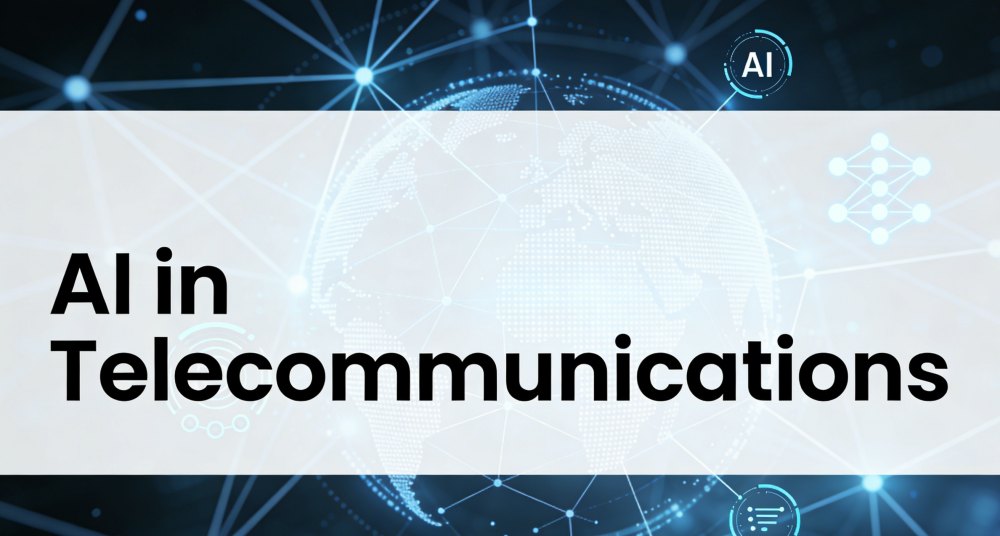
Modern phone networks have to handle billions of calls and data tasks every single second. Therefore, this massive scale creates a huge need for smarter systems that can think fast. Today, AI in telecommunications provides the best way to manage these complex digital traffic jams. Companies use smart tools to reduce downtime and respond faster to customers. Hence, this guide explains its definition, along with trends and future direction, clearly.

What is AI in Telecommunications?

AI in telecom means using smart software to run modern phone and data networks. Basically, these advanced systems use machine learning to predict network issues before they actually happen. Moreover, digital tools analyze huge amounts of data to find the fastest signal paths daily. Alongside that, natural language processing helps computer programs understand and answer your specific support questions.

Computers can now adjust network settings without any help from a human worker. Moreover, this technology turns a basic wire network into a brain that learns over time. In addition, deep learning models identify weird signal patterns to stop hackers from stealing your data. Smart algorithms also balance the heavy traffic during peak hours to prevent any slow speeds.

AI in Telecommunication Market Trends

The global market for AI for telecommunications is currently expanding at a very high speed. Recent Global Market Insights reports show this sector was worth about 2.7 billion dollars in 2024. In addition, Precedence Research now predicts the total market value will reach 50.21 billion dollars by 2034. So, this growth represents a massive yearly increase of nearly 38% for tech companies.

Alongside that, one major trend involves the shift toward fully autonomous networks that fix themselves daily. Besides, these systems use smart agents to find and solve signal errors without human help. Another trend focuses on generative AI tools to improve the overall customer service experience. Moreover, research from NVIDIA confirms that 97% of telecom firms already use AI today, says Scribd.

Benefits of Using AI in Telecommunications

The powerful combination of AI and telecommunications delivers major advantages for global service providers. So, the benefits outlined below extend beyond efficiency gains and set the stage for the key points that follow:

  • Network Performance: Smart algorithms analyze traffic patterns to optimize signal routing and data flow daily. As a result, these autonomous systems find and fix bottlenecks to ensure a very stable connection.
  • Predictive Maintenance: Advanced software detects small technical errors before they turn into major network outages. Hence, this proactive approach helps companies fix equipment without causing any service downtime at all.
  • Rapid Innovation: AI automates routine tasks, giving employees time for creative research and product development. Moreover, this support drives new services, better 5G features, and faster digital innovation overall.
  • Operational Efficiency: Smart automation cuts labor efforts and reduces extra site visits across large telecom systems. It also lowers common operational expenses by optimizing work schedules and stopping recurring failures.
  • Customer Experience: AI chatbots solve user issues faster and keep clients satisfied with simple support flows. In addition, data tools personalize offers and suggestions to match each customer’s exact usage habits.

Use Cases of AI in Telecommunications

Real deployments show how intelligence improves AI in telecommunication market outcomes today. Hence, these real examples show how automation improves reliability and customer service in major telecom industries:

1. Network Planning

Smart software analyzes current traffic data to decide where to place new 5G towers. This strategic approach also ensures that companies invest their money in the most needed areas. Furthermore, digital twins help engineers test network changes in a safe virtual environment before deployment.

2. Predictive Maintenance

Specialized sensors monitor equipment health to find signs of wear before a total failure. In addition, this technology prevents unexpected outages by alerting repair teams to fix hardware very early. Moreover, ResearchGate shows that proactive repairs can reduce annual total network downtime by 30%.

3. Conversational AI

Modern conversational AI in telecom provides instant help to customers through smart digital assistants. These bots also handle billing questions and technical troubleshooting without making users wait on hold. So, this automation allows human agents to focus on solving much more complex customer problems.

4. Fraud Detection

Advanced security models track calling patterns to stop illegal activities in real time. Furthermore, these systems identify suspicious international calls to protect users from high and unexpected charges. Alongside that, using AI use cases in telecom helps providers block millions of scam attempts daily.

5. Revenue Protection

Smart algorithms check billing records to find any missing payments or incorrect discount codes. Additionally, this automated audit helps companies recover lost income while keeping all customer accounts accurate. Also, stable growth in AI in the telecommunications market drives more firms to use these tools.

Challenges of AI in Telecommunications

Adopting AI in telecom comes with significant technical and organizational hurdles for global network providers. Anyhow, these complex difficulties often slow down the deployment of smart systems across the industry:

  • Data Quality: Companies usually store their network data in separate and messy old storage systems. This fragmented data also makes it very hard for AI models to learn effectively.
  • Legacy Systems: Legacy network tools sometimes clash with modern AI frameworks during complex implementation phases. Alongside that, upgrading these ancient systems requires massive financial investments and a lot of time.
  • High Costs: Running advanced AI models at a massive scale demands huge amounts of computer power. Yet, many smaller firms struggle to afford the high electricity and hardware maintenance fees.
  • Privacy Risks: Telecom firms handle sensitive user location data that hackers usually try to steal. In addition, protecting this private information while using AI requires very strict and expensive security.
  • Energy Demand: AI applications consume high energy resources and increase servers’ long‑term environmental footprint. Additionally, telecom firms must balance high network performance with green power goals and global commitments.

How Can ZEGOCLOUD Help in AI in Telecommunications

Modern telecom providers require high-speed tools to connect advanced AI agents with customers. ZEGOCLOUD offers a global real-time engagement platform designed for enterprise communication. Its low-latency video SDK enables natural, human-like interfaces and smoother support interactions. The infrastructure keeps AI in telecommunications responsive and reliable during peak traffic. It provides clear visuals and calls with support for up to 4K resolution.

👉 Talk to Sales

Additionally, this platform ensures ultra-low latency for video and audio with a 300ms average speed. Also, a strong infrastructure of 500+ global network nodes ensures uninterrupted connections for cloud-based support. Its Conversation AI’s LLM-powered agent logic processes human queries naturally while generating fast and intelligent automated replies. Furthermore, streaming speech recognition offers greater than 95% accuracy even under noisy call environments for better assistance.

The Future of AI in Telecommunications

The future of AI in the telecom industry promises massive financial gains for global providers. According to TBR, the total annual opportunity in this field will reach $170 billion by 2030. Also, this growth includes new revenue streams and massive savings on internal operating costs. Moreover, self-healing networks will grow to nearly $29 billion in just 6 years. These autonomous systems will fix signal errors without any help from human engineers.

Alongside that, Precedence Research reports that generative AI tools in the telecom industry will expand by 41% each year over the next decade. So, this rapid evolution allows companies to offer personalized services to every mobile user. Similarly, Symphony states that predictive maintenance will continue to reduce network downtime by 30% for everyone. In addition, emerging 6G technology will rely on these smart systems to manage massive data.

Conclusion

In conclusion, modern networks must evolve to keep up with our growing digital connection needs. Using AI in telecommunications is the only way to ensure a stable mobile future. Moreover, automation turns traditional phone services into intelligent systems that learn and adapt daily. Yet, choosing the right partner helps businesses launch these advanced features quickly and easily. ZEGOCLOUD provides the high-speed tools you need to build better AI customer services.

FAQ

Q1: What is AI in telecommunications?

AI in telecommunications refers to the use of artificial intelligence to automate, optimize, and improve telecom networks and services. It helps operators analyze network data, predict failures, enhance customer support, and manage traffic more efficiently in real time.

Q2: How is AI used in telecom networks?

AI is used to monitor network traffic, detect anomalies, predict congestion, and automate performance adjustments. It can analyze large volumes of operational data and optimize routing, bandwidth allocation, and fault detection without manual intervention.

Q3: What are the main benefits of AI in telecommunications?

The main benefits include improved network reliability, reduced operational costs, faster fault detection, better customer experience, and predictive maintenance. AI enables telecom providers to respond to issues before they impact users.

Q4: Why is AI important for the future of telecom?

AI is important because telecom networks are becoming more complex and data-driven. As traffic grows and services demand lower latency, AI enables automated decision-making and intelligent optimization at scale.

Let’s Build APP Together

Start building with real-time video, voice & chat SDK for apps today!

Talk to us

Take your apps to the next level with our voice, video and chat APIs

Free Trial
  • 10,000 minutes for free
  • 4,000+ corporate clients
  • 3 Billion daily call minutes

Stay updated with us by signing up for our newsletter!

Don't miss out on important news and updates from ZEGOCLOUD!

* You may unsubscribe at any time using the unsubscribe link in the digest email. See our privacy policy for more information.