Talk to us
Talk to us
menu

Livestreaming vs Podcasting vs Live Video Podcast: A Comparison

Livestreaming vs Podcasting vs Live Video Podcast: A Comparison

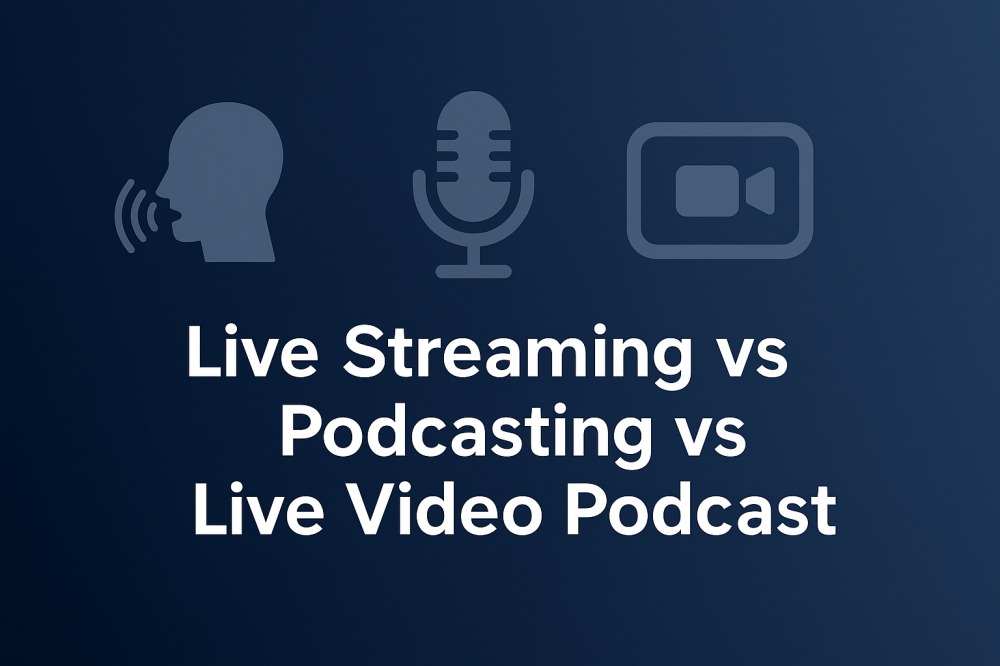
In today’s digital content landscape, live streaming vs podcasting vs live video podcast has become a major topic for brands, creators, and organizations that want to connect with their audiences in more meaningful ways. As these formats continue to evolve, the boundaries between live video podcasts and traditional broadcasting are becoming less clear, creating new opportunities for real-time engagement and interaction.

Brands and creators now face an important question. In a world driven by on-demand consumption and instant feedback, which format works best? Should you focus on live streaming, podcasting, or the hybrid live video podcast?

This article explores the key differences of each format to help you choose the most effective approach for your 2026 content strategy and audience engagement goals.

What is a Podcast?

A podcast is a pre-recorded show that focuses on a specific topic or theme. It is usually presented in audio format, although many creators now also produce video versions. Some offer both to meet different audience preferences.

Key Features of a Podcast

  • Usually, long-form content lasts between 30 and 60 minutes per episode.
  • Released as regular series or seasonal shows.
  • Emphasizes storytelling, expertise, and in-depth discussions.
  • Allows creators to build personal connections and audience loyalty.
  • Ideal for interviews, educational content, and thought leadership.

What is Livestreaming?

Livestreaming refers to broadcasting audio or video content over the internet in real time. It allows creators, brands, and professionals to connect with audiences through authentic, immediate interaction.

Key Features of Livestreaming

  • Enables real-time communication and audience engagement.
  • Viewers can comment, ask questions, and react instantly.
  • Creates a strong sense of authenticity and spontaneity.
  • Builds trust and transparency through live interaction.
  • Works well for events, product launches, and behind-the-scenes sessions.

What is a Live Video Podcast?

A live video podcast combines the structure of a podcast with the interactivity of livestreaming. The session is streamed live in both video and audio, then edited and republished on on-demand platforms such as Spotify or Apple Podcasts.

Key Features of a Live Video Podcast

  • Merges real-time engagement with long-term content availability.
  • Offers both video and audio versions for broader reach.
  • Allows audience participation through live chat and Q&A.
  • Provides opportunities for repurposing content after the live broadcast.
  • Balances the excitement of livestreaming with the depth of podcasting.

Livestreaming vs Podcasting vs Live Video Podcast

AspectLivestreamingPodcastingLive Video Podcast
FormatReal-time audio and videoPre-recorded audio (sometimes video)Live video and audio, later republished
EngagementInteractive chat and Q&AOn-demand listening with slower feedbackCombines live interaction and lasting visibility
EditingLittle post-productionFully edited and polishedLimited live editing, full editing afterward
MonetizationAds, donations, live shoppingAds, sponsorships, premium contentHybrid of live event income and podcast revenue
LongevityShort-term, event-basedEvergreen and long-lastingLive impact plus reusable podcast content
Best ForProduct launches, community eventsStorytelling, education, brand authorityInteractive interviews and hybrid shows
PlatformsYouTube Live, TikTok, TwitchSpotify, Apple PodcastsYouTube Live, Facebook Live, Spotify

When to Use Livestreaming, Podcasting, and Live Video Podcasts

Each format has its own characteristics and best use cases. Understanding what makes each one unique helps you decide which format fits your content strategy and audience expectations.

When to Use Livestreaming

Livestreaming works best when real-time interaction and immediacy are key. It is ideal for product launches, live events, webinars, or behind-the-scenes sessions where instant audience feedback adds value. It also suits brands that want to build excitement and authenticity through spontaneous communication.

If you want to integrate live streaming into your app, platforms like ZEGOCLOUD provide low-latency live streaming SDKs and APIs that make it easy to deliver smooth, real-time experiences.

When to Use Podcasting

Podcasting is perfect for long-form storytelling and in-depth discussions. It is a great choice for thought leadership, brand storytelling, educational content, and interviews that audiences can listen to on demand. Podcasts help build loyal audiences who value consistency, expertise, and authentic conversations.

When to Use Live Video Podcasts

Live video podcasts combine the strengths of both livestreaming and podcasting. They are ideal for live interviews, interactive Q&A sessions, community-focused shows, and global discussions that can later be edited and distributed as podcasts. This hybrid format lets you engage audiences live while extending the value of your content long after the broadcast ends.

With tools like ZEGOCLOUD’s interactive live audio and video SDK, creators can host engaging, high-quality live podcasts and repurpose the content seamlessly for on-demand platforms.

Final Thoughts

In 2026, the boundaries between livestreaming, podcasting, and hybrid formats are becoming increasingly blurred. Whether your brand focuses on authentic real-time interaction or evergreen storytelling, the right choice depends on your audience and communication goals.

For developers and businesses that want to integrate interactive broadcasting or live podcasting features, ZEGOCLOUD provides SDKs and APIs that make it simple to build high-quality, low-latency communication experiences. With the right tools and strategy, your content can connect with audiences more effectively in the evolving digital landscape.

FAQ

Q1: What is a live podcast?

A live podcast is a podcast that is broadcast in real time. Listeners can join while the show is happening, interact through comments or questions, and enjoy a more engaging and spontaneous experience compared to pre-recorded episodes.

Q2: What are the three types of podcasts?

The three common types of podcasts are interview podcasts, where hosts talk with guests; solo podcasts, where a single host discusses topics or stories; and panel podcasts, where multiple hosts or experts share opinions and insights on a subject.

Q3: What is a podcast with video called?

A podcast that includes video is called a video podcast or vodcast. It combines audio storytelling with visual elements, making it more engaging for audiences who prefer to watch rather than listen.

Q4: What is the difference between podcasting and live streaming?

Podcasting is usually pre-recorded and edited before being published for on-demand listening, while live streaming happens in real time. Live streaming allows immediate interaction with viewers, whereas podcasts focus more on long-form storytelling and can be consumed anytime.

Q5: What is the difference between live stream and video?

A live stream is broadcast as it happens, allowing real-time participation and engagement. A video is pre-recorded, edited, and uploaded later, giving creators more control over quality and presentation..

Let’s Build APP Together

Start building with real-time video, voice & chat SDK for apps today!

Talk to us

Take your apps to the next level with our voice, video and chat APIs

Free Trial
  • 10,000 minutes for free
  • 4,000+ corporate clients
  • 3 Billion daily call minutes

Stay updated with us by signing up for our newsletter!

Don't miss out on important news and updates from ZEGOCLOUD!

* You may unsubscribe at any time using the unsubscribe link in the digest email. See our privacy policy for more information.