Talk to us
Talk to us
menu

How to Develop a Home Services App

How to Develop a Home Services App

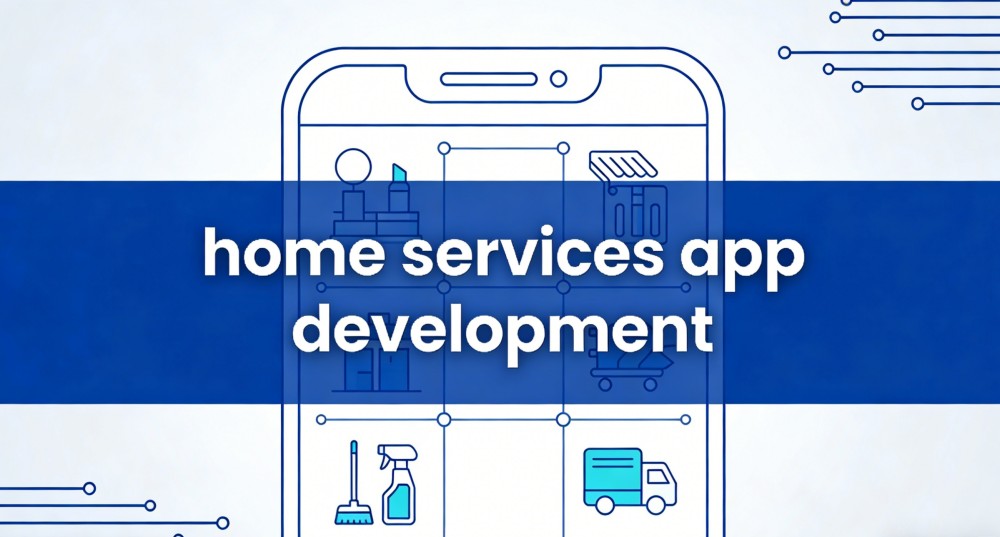
People now want faster and easier ways to get help with home tasks. Alongside, modern homeowners now demand quick solutions for plumbing or urgent electrical repairs. Therefore, this shift makes home services app development a vital move for smart business owners. Here, you can connect skilled professionals with busy customers through a simple mobile platform. Thus, this guide explores how you can build a successful and highly profitable app.

Why Invest in Home Services App Development?

Strategic leaders now recognize how on-demand home services app development drives massive growth. Now, let’s explore the key reasons why investing in this market brings rewards:

  • Market Expansion: According to Exactitude Consultancy, this specific global market value will reach USD 1,599.94 billion by 2034. Such impressive growth represents a steady annual climb of nearly 14%.
  • User Convenience: Mobile apps allow customers to find and book local experts with simple taps. Moreover, digital tools remove the old stress of making many phone calls for help.
  • Service Transparency: Real-time updates increase confidence and keep users aware of each service stage. Furthermore, ratings and even tracking help maintain fairness and trust among active users.
  • Revenue Upside: One For Insights Consultancy report states that global revenue is expected to increase from USD 7.10 billion to USD 19.70 billion. In addition, this demonstrates a strong 16.8% CAGR, indicating high profit opportunities for investors.
  • Cost Efficiency: Automated booking systems prevent idle time and reduce total management costs effectively. Moreover, routing tools and digital invoices also cut labor and paperwork issues.

Top 5 Home Services Apps in 2026

Studying market leaders helps you choose a top home service app development company. So, these 5 platforms currently define the gold standard for modern digital service delivery:

1. TaskRabbit

home services app - tackrabbit

TaskRabbit stands as a global leader backed by solid home services mobile app development strategies. While using it, users can browse through vetted local “Taskers” for immediate help with repairs. This platform also operates across thousands of cities and supports over 200,000 workers. In addition, it offers same-day availability for urgent needs like plumbing or moving heavy household items.

Key Features

  • You can edit your specific work area by tapping zones on a digital map.
  • The system automatically pays a fee if a client cancels within 24 hours.
  • New partner tasks offer fixed-price gigs from brands like IKEA for guaranteed upfront earnings.

2. Thumbtack

home services site - thumbtack

The Thumbtack platform focuses on developing smarter home services apps to connect homeowners with skilled local professionals. It supports over 1,100 service categories, covering repairs and wellness. Besides, its smart “Home Profile” can organize property details, maintenance history, and upcoming tasks conveniently. Apart from that, native messaging guarantees an increase in trust and confidence for every booked project.

Key Features

  • Users can instantly book various services at fixed prices without waiting for manual quotes.
  • This platform manages approximately 7 million customer projects annually for millions of active users.
  • Instant Book lets users schedule certain services at fixed prices without long back-and-forth communication.

3. Housecall Pro

home services mobile app - housecall pro

Housecall Pro is a specialized field service management platform for home service trades. Moreover, modern home services app development enables the system to efficiently support more than 200,000 professionals. It also processes millions of transactions for HVAC, plumbing, and electrical service businesses globally. Alongside that, live GPS tracking provides customers with accurate “on my way” text message updates.

Key Features

  • A flat-rate digital price book helps standardize profitable pricing for all your trade services.
  • Drag-and-drop calendars help dispatchers assign technicians quickly for optimal efficiency.
  • The system automatically syncs every financial record with QuickBooks to reduce double data entry.

4. Angi (Angie’s List)

home services website - angi

Strategic on-demand home services app development helps Angi manage over 150 million projects. Moreover, it currently connects homeowners with 200,000 certified pros across 500 different service categories. Besides, Angi’s advanced matching system processes thousands of service requests every single hour of the day. Alongside, every project booked through their platform includes a robust happiness guarantee for total peace.

Key Features

  • The Angi for Pros app allows technicians to manage their business leads on mobile.
  • Homeowners can view millions of verified reviews and photos from previously completed local jobs.
  • Verified contractors pay for premiums, which leads to connecting with customers ready to start work.

5. Handy

home services software - handy

Handy focuses heavily on on-demand home cleaning and basic handyman work across major cities. Currently, Handy operates in over 28 cities and maintains a massive 10,000 active professionals. Besides, the company reports processing over 3 million bookings annually and achieving high customer satisfaction globally. In addition, its secure digital system handles all payments and tips to eliminate risky cash transactions.

Key Features

  • You can book next-day or scheduled appointments for home cleaning and handyman jobs.
  • Real-time job tracking shows exactly when your professional arrives at your home location.
  • Customers can easily check job progress remotely through the mobile app at any time.

Must-Have Features of Home Services App

Successful home services mobile app development focuses on creating a seamless journey for every user. Thus, these essential features ensure high retention rates and build long-term trust for your brand:

  • Smart Discovery: Users browse categories like cleaning or repairs with simple filters and fast search. In addition, smart matching shows available pros based on location and price range.
  • Live Tracking: Maps display ETA provider and real-time job status updates for full visibility. Alongside that, push notifications alert users about arrivals and job completions instantly.
  • Secure Payments: Multiple payment methods like cards and digital wallets ensure a very smooth checkout experience. Besides, encrypted systems protect sensitive data while providing clear digital invoices for every single transaction.
  • In-app Communication: Native chat features allow customers and providers to discuss job details without sharing phone numbers. Additionally, fast access to live support will be beneficial in solving any conflicts or technical inquiries, highly effectively.
  • Management Tools: Providers use a dedicated dashboard to manage their daily schedules and track total earnings. So, integrated navigation helps technicians find customer locations quickly to ensure they always arrive on time.

How to Develop a Home Services App

Building a competitive app requires focused home services app development with proven technical steps. Now, follow these structured phases to launch your platform successfully.

Step 1. Define Your Home Services App’s Model

You must first decide between a marketplace or a managed provider model. Here, pick a marketplace style like TaskRabbit that connects independent pros directly. Besides, select a managed provider approach like Handy with direct staff relationships. So, this narrow focus allows you to build a stronger brand before expansion.

Step 2. Design the App’s Feature Set and Flows

On-demand home services app development starts with clear feature blueprints for all users. Therefore, design customer flows for sign-up, service search, and secure payments first. Besides, create provider tools for onboarding, job alerts, and earnings tracking next. Furthermore, build admin panels to manage users and platform analytics effectively.

Step 3. Choose Tech Stack and Communication Layer

Choose stable frameworks like Flutter or React Native to build for both major platforms. Developers can integrate Google Maps for geolocation, Stripe for secure payments, and Firebase for push notifications. For real-time communication, ZEGOCLOUD SDK enables in-app messaging, voice calls, and video consultations without requiring complex backend infrastructure.

Step 4. Implement Core Features and Integrations

Develop core features by connecting customer, provider, and admin interfaces to backend APIs first. In addition, add booking logic with slot availability and even simple pricing calculations next. Once done, test all flows thoroughly to ensure smooth operation across all user types daily.

Step 5. Launch and Iterate the Home Services App

Home services mobile app development succeeds through smart launch strategies and constant improvement. Further, start in one city and hand-pick providers to ensure quality service delivery first. Also, use feedback and data insights to refine features and expand markets.

How Much Does Home Services App Development Cost?

Estimating the total budget for professional home services app development depends on your specific goals. So, a simple MVP with basic booking usually costs between USD 20,000 and USD 40,000. Similarly, mid-level marketplaces with chat and real-time tracking range from USD 45,000 to USD 120,000. Also, advanced platforms featuring AI matching and complex analytics can exceed USD 100,000 to USD 250,000.

Therefore, choosing cross-platform frameworks helps control expenses when building for both iOS and Android systems. You should also budget USD 20,000 to USD 80,000 for development costs like marketing. Apart from that, maintenance typically requires about 15 to 25% of your initial build cost every year. Thus, choose wisely between MVP speed and scalable investment for market entry.

Integrating Real-Time Chat and Video into a Home Services App with ZEGOCLOUD

Effective communication remains the backbone of successful home services app development. Customers often need instant confirmation, live consultation, or real-time updates before and during service delivery. Without seamless communication, booking conversions and user trust can quickly decline.

Instead of building complex real-time infrastructure from scratch, developers can integrate solutions such as ZEGOCLOUD to enable in-app chat and video communication efficiently. The Chat and Video SDK is designed to maintain stable performance even in low-bandwidth environments. Video calls remain smooth under challenging network conditions, while bandwidth optimization allows stable connections with minimal data requirements.

With global routing and intelligent network scheduling, calls connect quickly across regions. Low latency ensures natural voice conversations without noticeable delays. The ZIM SDK further supports 1:1 and group messaging with offline push notifications, enabling users to stay connected throughout the service journey. Rich media sharing, including HD images and voice notes, helps customers and professionals clarify service details more effectively.

Security also plays a critical role. End-to-end encryption and GDPR-compliant data protection safeguard private conversations between customers and service providers. By integrating these real-time capabilities, developers can significantly reduce infrastructure complexity and focus more on product experience and business logic.

Conclusion

To sum up, home services app development opens doors to fast growth and happy customers. So, you now understand market trends, top apps, and clear build steps. Moreover, smart planning helps you launch a platform that connects pros and users easily. In addition, start small and grow with real feedback from users. When you want to add reliable real-time chat and video, integrating ZEGOCLOUD helps enhance overall user experience.

FAQ

Q1: How much does it cost to develop a home services app?

The cost depends on features, platform, and development location. A basic MVP may range from $15,000 to $40,000, while a full-featured marketplace app with real-time chat, payments, and admin panels can exceed $80,000.

Q2: What features should a home services app include?

Core features typically include user registration, service listings, booking and scheduling, payments, ratings and reviews, and real-time chat or call support. Advanced versions may also include GPS tracking and service history.

Q3: What is the best tech stack for home services app development?

Many developers use Flutter or React Native for cross-platform apps, Node.js or Django for backend development, and cloud services like AWS or Firebase for hosting and storage.

Q4: How do home services apps make money?

Most platforms earn through commission per booking, service provider subscription fees, featured listings, or in-app advertising.

Q5: How long does it take to build a home services app?

A basic version can take 3 to 5 months. More complex platforms with advanced features may require 6 months or more.

Let’s Build APP Together

Start building with real-time video, voice & chat SDK for apps today!

Talk to us

Take your apps to the next level with our voice, video and chat APIs

Free Trial
  • 10,000 minutes for free
  • 4,000+ corporate clients
  • 3 Billion daily call minutes

Stay updated with us by signing up for our newsletter!

Don't miss out on important news and updates from ZEGOCLOUD!

* You may unsubscribe at any time using the unsubscribe link in the digest email. See our privacy policy for more information.