




If you are out to build a real-time app, know that choosing the right foundation is the key. Therefore, Agora vs Stream are two famous names that are the preferred choice of developers, but which one is the right option? We will compare them in this guide and assist you in deciding whether they are worth using in developing apps.
What is Agora?
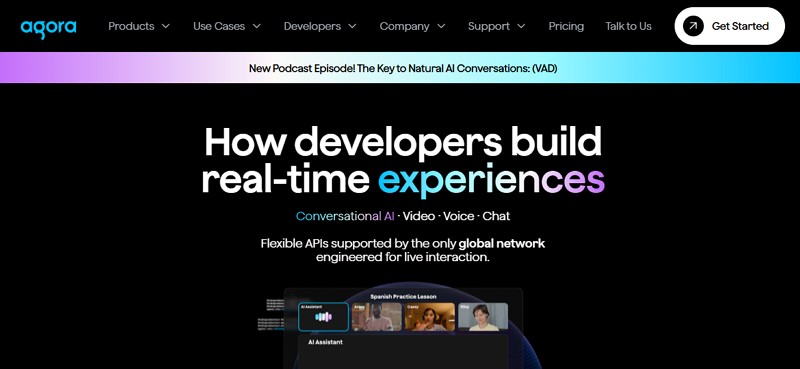
Agora is a cloud-based real-time engagement platform that allows developers to add live voice, video, and messaging to web, mobile, and desktop apps. Additionally, one can use this platform for creating virtual events, online meetings, telehealth, education, gaming, and other interactive experiences. Using its APIs, it supports one-to-one calls, group chats, and broadcasts.
Moreover, SDRTN maintains a quick and smooth connection all around. With features like AI noise suppression, echo cancellation, 3D spatial audio, etc., users can also enjoy seamless interaction. In terms of safety and privacy, its AES-256 encryption, global redundancy, and region-based routing are the foremost aspects.
Advantages and Disadvantages of Agora
When you compare Agora Vs Stream, the first thing that comes to your mind is the pros and cons. Hence, if you want to save the hassle of searching platforms, review the given points for better clarity:
Advantages
- Agora’s SD-RTN™ delivers under 400ms latency for streaming, calls, and gaming.
- Build custom experiences, integrate tools, and tailor services for various industries.
- 99.99% uptime SLA, stable global service, trusted for enterprise applications.
- SDKs for web/mobile, cross-platform, customizable UI for easy integration.
- AI noise suppression, echo cancellation, and codecs ensure consistent AV quality.
Disadvantages
- Pay-as-you-go costs rise fast for HD streams and premium features.
- Advanced setups and modular SDKs require extra developer effort.
- Limited whiteboarding, moderation, and global language support out of the box.
- Customer service can be slow or inconsistent for technical questions.
- Recording, analytics, and moderation increase enterprise costs significantly.
What is Stream?
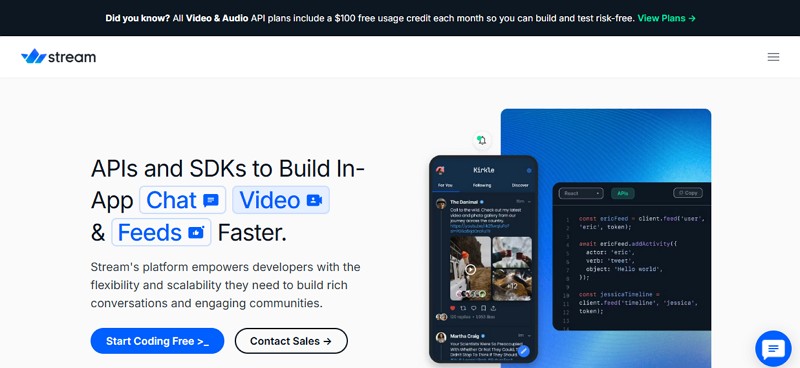
Stream is a cloud-based platform that helps developers build scalable and engaging features for web and mobile apps. Additionally, developers can use it to make social apps, online communities, marketplaces, gaming platforms, live streaming, and collaborative tools. The platform also offers real-time chat APIs with one-on-one or group messaging, file attachments, reactions, etc.
Stream provides customizable activity feeds similar to social media streams so that apps can display updates and notifications in real-time. Besides, its global infrastructure and efficient protocols like WebSockets ensure low latency, smooth performance, and support millions of users.
Advantages and Disadvantages of Stream
For the Agora vs Stream comparison, many of you might desire to know the basic perks and pitfalls of Stream. Therefore, this section highlights 5 benefits and 5 drawbacks of this platform for a quick overview:
Advantages
- Well-documented SDKs for React, SwiftUI, Flutter, Jetpack Compose, and easy integration.
- Ready-made UI components speed up chat feature deployment.
- Handles large user bases and high message volumes reliably.
- Strong moderation, GDPR compliance, and secure user data handling.
- Responsive support and an active developer community ensure platform improvements.
Disadvantages
- Advanced moderation and content filtering are paid add-ons in higher plans.
- SDKs and UIKits may not support complex workflows.
- Limited structured message functionality for advanced use cases.
- Customization is restricted due to Stream’s closed-source architecture.
- Higher costs for large workloads; self-hosting is not available.
Agora vs Stream: Which One is Right for You?
In terms of Agora vs Stream comparison, developers look to seek a quick review to make final decisions rather than searching for hours. Therefore, this section compares both platforms in detail to make a decision easier and time-saving:
| Metric | Agora | Stream (GetStream) |
|---|---|---|
| Core Use Cases | Video/audio calls, live streaming, broadcasts | Chat, video calling, live streaming, activity feeds, audio rooms |
| SDK & Platform Coverage | iOS, Android, Web, Unity, React Native, C++, and more | React, React Native, Flutter, Android, iOS, Web, Compose, SwiftUI |
| Customization | Extensions for AI noise suppression, backgrounds, 3D audio; moderate UI customization | Highly flexible UI/logic; deep component overrides; ideal for custom apps |
| Latency | Ultra-low (200–400ms) via global SD-RTN™ network | Low latency (\<250ms for chat); higher for CDN-based video streaming |
| Scalability | Millions of concurrent users, large broadcast, proven at a global scale | Scalable to millions overall; individual channels capped (~2,500 users) |
| Feature Set | Live streaming (HLS, RTMP), video/audio calls, virtual backgrounds, whiteboard, AR, and moderation | Chat (group & direct), feeds, light video calls, AI moderation, backstage mode, engagement tools |
| Integration Difficulty | App Builder for basic setup; modular SDKs for advanced use | Fast setup, modern, intuitive dashboard, streamlined integration |
| Compliance & Security | AES-256 encryption, GDPR, HIPAA, SOC 2; flexible region routing | End-to-end encryption, SOC 2, GDPR, USA/EU compliance, robust moderation |
| Support | Mixed reviews; slower for enterprise, faster for low-code users | Rapid support (\<30 min for enterprise), strong docs/community |
| AI Moderation/Abuse Mgmt | Basic, some extensions | Real-time AI, advanced flagging, better for public chat/video |
| Backstage/Preview Mode | Not natively included | Yes, facilitates speaker setup before live events |
| Virtual Backgrounds/FX | Extensive via Media Extensions | Limited, some support via custom components |
| Advanced Media Features | Voice effects, 3D spatial audio, AR extensions | Less emphasis, focuses on moderation, engagement features |
| Audit & Logging | Audit logs, call statistics | Detailed analytics, LiveOps dashboard, message/call history |
| UI Component Libraries | Basic, functional, less modern | Extensive, customizable, modern SDK-powered UIKits |
| Global Coverage | 200+ countries, dynamic routing for best quality | Global edge network, regional failover; proven reliability |
| User/Dev Experience | Quick for basic, advanced setups require a learning curve | Known for easy setup, great docs, fast implementation |
| Industry Vertical Fit | Entertainment, events, education, telehealth, OTT | Social, e-commerce, gaming, online communities, enterprise messaging |
ZEGOCLOUD: A Better Alternative to Agora and Stream
When you compare Agora and Stream, both seem powerful and capable of handling real-time communication. But if you take a closer look, they often stop at the basics, such as messaging or simple video calls.
1. All-in-One Real-Time Engagement SDKs
ZEGOCLOUD brings everything developers need into one platform. You can easily integrate video calls, voice chat, live streaming, media sharing, and push notifications without switching between multiple tools.
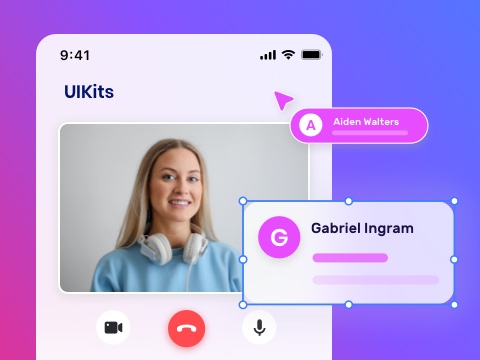
It also supports co-hosting and CDN streaming, allowing creators and teams to build collaborative live sessions with ease. With more than 20 pre-built UIKits, developers can quickly turn ideas into reality and launch interactive apps faster than ever.
2. AI That Understands You
ZEGOCLOUD goes beyond connecting people. It helps you communicate smarter.
The AI Agent API combines NLP and TTS technology to make conversations with AI sound natural and meaningful. You can chat with AI in real time, even in groups, and create lifelike experiences using AI voice cloning.
To make every interaction smoother, ZEGOCLOUD also includes AI noise reduction and echo cancellation, ensuring that your voice stays clear and your calls sound professional wherever you are.
3. Smooth and Reliable Everywhere
ZEGOCLOUD keeps communication flowing no matter where your users are. It delivers an average global latency of under 300 milliseconds, which means conversations, calls, and live streams feel truly real time even under weak network conditions.
With intelligent voice processing, it can automatically detect who is speaking and adjust the volume for an effortless and natural listening experience.
4. Built for Developers Who Want More
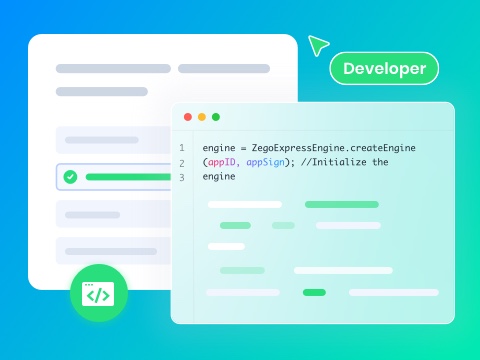
ZEGOCLOUD is designed for developers who value speed, simplicity, and performance. Its SDKs are well-structured and come with clear documentation and cross-platform compatibility.
Instead of spending weeks building interfaces from scratch, developers can start quickly with ready-to-use UIKits and focus on what really matters: creating experiences that users love.
While Agora focuses on infrastructure and Stream centers around messaging, ZEGOCLOUD brings everything together. It combines real-time video, voice, chat, and AI capabilities into a single, seamless solution that empowers you to build richer and more interactive applications.
It is reliable, intelligent, and built for the future of human communication.
Conclusion
To wrap up, Agora vs Stream are the two famous platforms, and choosing the best one is a need of the time. Therefore, in this guide, we have compared them to help you decide which one suits your development skills and budget needs. However, we suggest using ZEGOCLOUD since the platform offers you easy-to-integrate SDKs with AI APIs and pre-built UIKits.
FAQ
Q1: What is the core difference between Agora and Stream?
Agora is mainly known for real-time video and audio communication, making it ideal for live streaming, video conferencing, and voice chat apps. Stream, on the other hand, focuses on chat, messaging, and social feeds, helping developers build in-app communication and community features.
Q2: Which one offers better developer experience?
Stream is often praised for its modern SDKs and clean documentation, making chat integration smooth and quick. Agora’s SDKs give developers deep control over video and audio performance but might require more configuration. For developers who prefer a balance between simplicity and flexibility, ZEGOCLOUD provides pre-built UIKits and detailed guides that speed up integration without sacrificing customization.
Q3: When should I choose Agora or Stream?
Choose Agora for apps centered on real-time video, audio, or live events. Choose Stream for apps focused on chat, messaging, or social interaction. If your product needs both real-time media and interactive chat in one SDK, ZEGOCLOUD provides the flexibility and performance to support both effectively.
Let’s Build APP Together
Start building with real-time video, voice & chat SDK for apps today!
