



How the Multimodal AI Agent Is Reshaping Real-Time Experiences
 Thomas Carter
Jan 19, 2026
5 min
read
Thomas Carter
Jan 19, 2026
5 min
read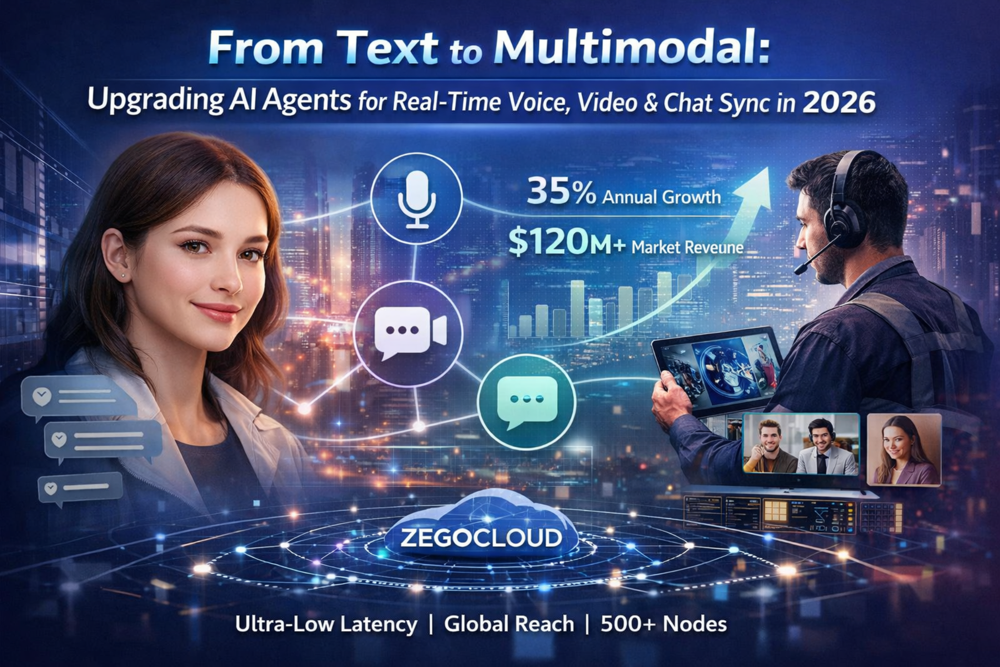
Imagine this.
A user opens your app and begins typing a question to an AI companion.
Within seconds, the interaction shifts into a natural voice conversation. Then the camera turns on. A lifelike digital avatar appears, looking at the user in the eye, responding with warmth and context.
No awkward pauses. No switching between disconnected interfaces. Just one continuous experience — flowing seamlessly across chat, voice, and video.
We are moving far beyond text-based chatbots. According to recent industry analyses from leading consultancies, multimodal AI adoption is accelerating at over 35% annually, while AI companion products alone are on track to exceed $120 million in consumer spending this year. Enterprises adopting multimodal AI agents are already reporting longer engagement sessions, lower churn, faster deal cycles, and measurable reductions in support costs.
The strategic question is no longer whether to adopt multimodal agents. It is how quickly you can do it without breaking reliability, performance, or scale.
What a Multimodal AI Agent Really Means
A multimodal AI agent is not just “AI with more features.”
In production environments, it means an agent that can:
- Understand spoken conversation
- Interpret visual context from live video and screen sharing
- Track and generate real-time text messages
- Maintain a single continuous session context across all three channels
Most importantly, it reacts in real time, inside live human conversations — not after the fact.
When this synchronization works, the agent stops being a tool and starts becoming a participant.
Where Multimodal AI Agents Are Delivering Real Results
Customer Support
Picture a support session that begins with a simple chat message. The issue turns out to be more complicated. The customer taps to start a voice call. Still unclear. They enable their camera and show the problem.
Throughout the entire journey, the multimodal AI agent:
- Remembers every detail
- Interprets tone and urgency
- Understands what the camera reveals
- Assists the human agent in real time
The customer never repeats themselves.
The agent never starts from scratch.
Teams using this modal routinely see:
- 35–50% shorter handling times
- 20–30% higher first-contact resolution
- 15–25% higher customer satisfaction
Not because the AI is smarter — but because the experience is smoother.
Collaboration & Meetings
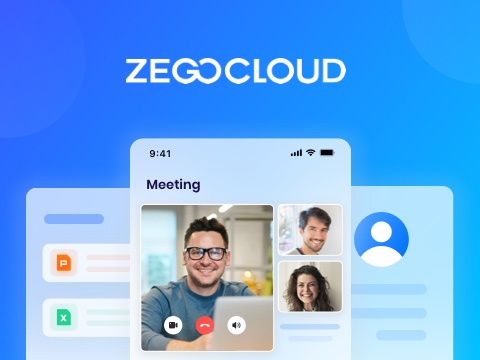
In modern meetings, people talk, share screens, send messages, and make decisions — all at once.
A multimodal AI agent lives inside that chaos.
It listens to the conversation, watches the screen, tracks decisions in the chat, and quietly builds a clear summary of what actually happened and what needs to happen next.
When the meeting ends, the work doesn’t stall. It accelerates.
Remote Support & Field Work
When technicians or customers can simply show a problem instead of trying to explain it, everything speeds up. The agent sees the issue, hears the description, and provides guidance that fits both.
That’s not automation. That’s understanding.
Why Real-Time Infrastructure Determines Success
Text-based agents can handle simple questions, but they struggle to deliver interactions that truly feel human.
In practice, the hardest challenge is not the AI model itself — it’s synchronization.
For a multimodal AI agent to feel natural, everything must stay perfectly aligned:
- voice timing
- video frames
- chat messages
- AI responses
Even a few seconds of delay breaks the illusion.
This is why real-time communication infrastructure becomes the foundation of the entire experience.
Platforms like ZEGOCLOUD exist specifically for this layer of the problem: delivering ultra-low latency voice and video, synchronized with in-session chat, at global scale, with the stability enterprises require.
Without this foundation, multimodal AI never truly feels alive.
How ZEGOCLOUD Powers Multimodal AI Agents at Scale
ZEGOCLOUD’s real-time communication platform is purpose-built for synchronized multimodal interaction.
Key features drawn from our solutions:
- Ultra-Low Latency RTC — Average 300ms globally (as low as 79ms), with resilience up to 70% packet loss—ensuring voice responses under 1s and smooth video streaming.
- Voice Call SDK — Supports crystal-clear group voice chats (up to 10K users), ideal for multi-agent conversations. Integrates Purio AI Audio Engine for lifelike, emotional voice processing.
- Video Call SDK — Enables real-time video with seamless sync to voice and chat, perfect for visual agent interactions.
- In-App Chat SDK — Feature-rich messaging that synchronizes effortlessly with voice/video streams for hybrid experiences.
- Digital Human — AI-generated avatars with lip-sync and gestures, turning agents into visual, expressive characters.
- AI Effects SDK — Adds filters and enhancements for engaging video-based multimodal interactions.
- Conversational AI Agent Support — Pre-integrated for multimodal scenarios, including multi-LLM connections (e.g., ChatGPT, Qwen) and group chats with multiple AI characters.
These tools work together: Route LLM-generated text through chat, convert to voice via TTS with Purio, and display on Digital Human avatars—all synchronized in real-time. ZEGOCLOUD’s global network (500+ nodes) and pre-built UIKits accelerate development, letting you focus on agent logic.
Migration Path: From Text Bot to Multimodal AI Agent
Here’s how to upgrade your AI agent using ZEGOCLOUD:
- Start with Text Base — Use the In-App Chat SDK for core messaging. Integrate your LLM for responses.
- Add Voice — Incorporate Voice Call SDK. Generate TTS audio from LLM text and stream via low-latency channels. Enable interruptions for natural flow.
- Incorporate Video — Switch to Video Call SDK for visual streams. Add Digital Human for avatar rendering with real-time lip-sync.
- Achieve Full Sync — Use unified room/session management across SDKs to align streams. Leverage Purio for audio enhancements and AI Effects for video polish.
- Scale to Multi-Agent/Group — Support multiple AI characters in one session (e.g., group voice chat with distinct personas).
Example Architecture:
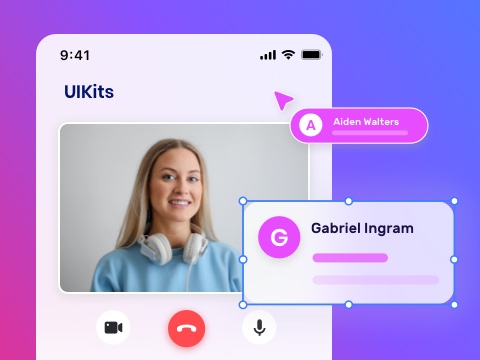
- Frontend: UIKits for chat/voice/video interface.
- Backend: LLM processes input → Output text/voice → Routed through ZEGOCLOUD RTC.
- Sync: Stream IDs ensure audio/video align with chat updates.
Conclusion
By 2026, AI will no longer be something users open. It will be something they experience — in every conversation, support session, meeting, and sale.
With ZEGOCLOUD’s low-latency SDKs, Purio AI Audio, Digital Human, and seamless sync capabilities, you can build these next-gen agents quickly and reliably.
Ready to make the leap? Sign up for ZEGOCLOUD’s free trial, explore our docs, or try a demo today. Visit zegocloud.com to get started and bring your multimodal vision to life.
Let’s Build APP Together
Start building with real-time video, voice & chat SDK for apps today!
